Production & Products
The Supplier Says “Equivalent.” Equivalent at Which Job?
A replacement material can match a grade table and still leave service conditions or interfaces unresolved. Ask for the comparison that belongs to the actual part.
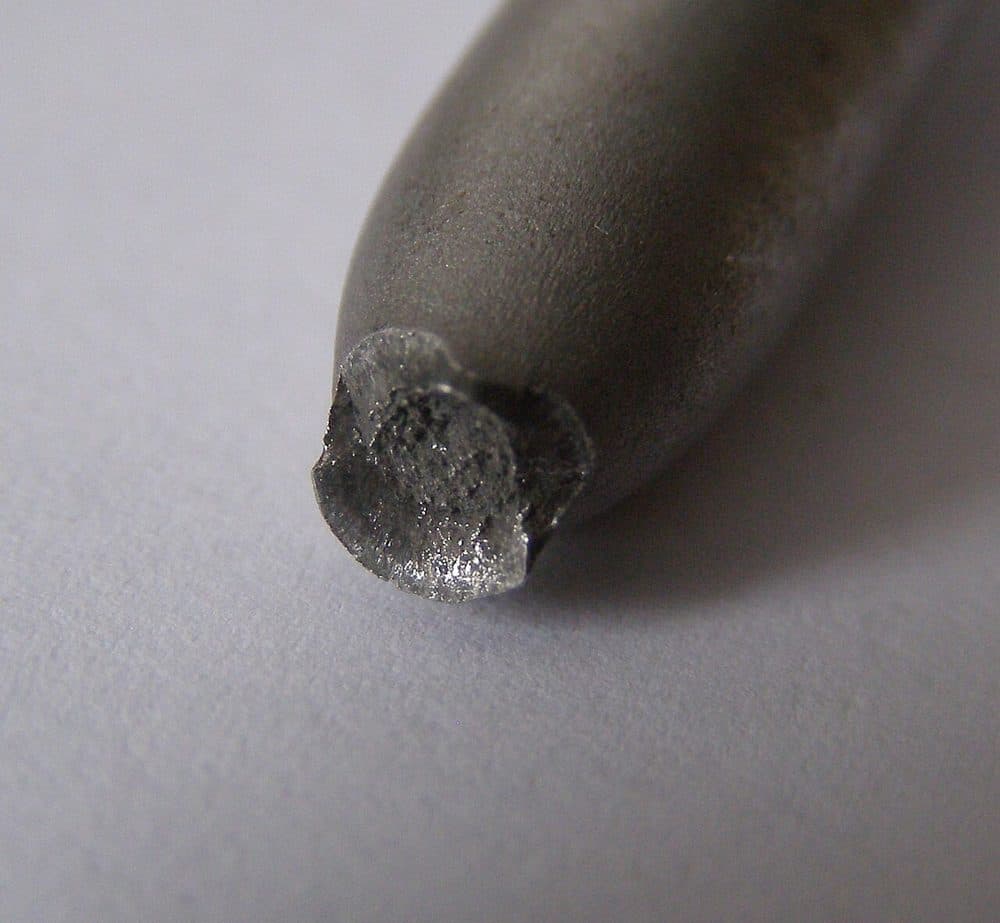

“Equivalent material available” can be a useful reply to an RFQ. It may offer a way around a long lead time or an awkward minimum order. The difficult part is the noun that follows equivalent: composition, strength, corrosion behaviour, manufacturing condition, or the finished component’s job? A purchasing decision becomes fragile when those different promises are compressed into one word.
The first response need not be a rejection. Ask the supplier to identify the original requirement, the proposed change and the property being compared. Keep three questions separate: what will the material arrive as, what must it survive in service, and how will the finished part connect to the rest of the system? A clear answer can make an alternative worth evaluating. A confident grade-name comparison cannot answer all three.
A cross-reference is the start of a conversation
Alleima’s public heat-exchanger tube materials table is a useful reminder of how carefully such comparisons need to be read. It marks some designations as nearest equivalents and flags a designation that is informative rather than applicable to tube and pipe. The same page lists product standards separately. Those distinctions appear in a manufacturer’s own selection information; they should survive the journey into a supplier’s quotation.
For an order, retain the complete original designation and governing product specification, including the edition if the contract identifies one. Then put the proposed designation beside it. Ask which requirements match, which differ and which have not been compared. This is more informative than accepting a screenshot whose row happens to contain both names. Do not treat a published comparison as authorization to depart from the drawing.
The incoming material also needs a condition. Ask whether the offered product has the required form, processing route and delivery condition, and what records will establish them. A test certificate should be tied to the material proposed for supply. A catalogue describes a product offering; it does not identify the particular heat or batch that will become the buyer’s part.
The service condition is part of the comparison
A corrosion claim is especially easy to detach from its conditions. Outokumpu explains that its laboratory guidance uses controlled chemicals and conditions, while actual service may include contaminants, variation and a different oxygen content. It also separates uniform-corrosion information from localized attack. A favourable result in one kind of exposure therefore leaves other questions to investigate; it is not a universal ranking of materials.
A buyer can turn that limitation into a better request. Send the relevant service envelope with the comparison: media, contaminants that are known, temperature range, exposure pattern and the life or maintenance expectation in the specification. Mark missing operating information as missing. If the supplier’s evidence uses another environment, ask the technical reviewer to explain why it is relevant rather than silently accepting the difference.
This does not require procurement to invent a corrosion test or choose a grade from a chart. It requires the seller’s claim and the engineer’s question to meet in the same document. Where suitability depends on conditions the buyer cannot define, that uncertainty belongs in the decision. A quicker delivery date is valuable information, but it does not resolve an unknown operating environment.
The material sits inside an assembly
AMPP’s materials-selection guidance includes compatibility with other system components alongside mechanical properties, maintenance and service life. Its discussion of system design also includes geometry, crevices and dissimilar-metal separation. That is a broader brief than comparing two values in a material datasheet. It asks what the material will be doing after it leaves the supplier’s warehouse.
For a replacement component, add a marked drawing showing the interfaces that the proposal leaves unchanged and those it affects. Ask about mating dimensions, connection details, surface requirements and any downstream fabrication or treatment that the project specifies. Treat an answer of “same outside size” as an answer about size. It is not, by itself, evidence about the other requirements.
The review should also identify who owns each question. Procurement can assemble the quotation, traceability documents and comparison. The responsible engineering or quality reviewer should determine whether the proposed evidence addresses the intended use and governing requirements. This is particularly important where the substitution changes an approved design basis. A buyer should not be pushed into supplying the missing technical approval merely by signing a revised price.
Buy the bounded change
A useful substitution record can remain short. Name the affected drawing and order lines; identify the original and proposed material and condition; list the compared properties and evidence; state the operating assumptions and interfaces; and record the authorized decision. Ask the supplier to declare unresolved differences explicitly. An empty comparison cell should remain visible rather than disappearing into a final sentence saying that everything is equivalent.
If the alternative is accepted, carry the approved scope into the order and inspection instructions. If approval covers only a particular part, condition or service, preserve that limit. Keep the original requirement visible so the receiving team can tell an authorized change from an unexplained deviation. An approval that cannot be connected to the delivered material is difficult to use when a question appears later.
The commercial opportunity is still there: a suitable alternative may simplify supply. The buying discipline is to make the promise small enough to check. Ask the supplier to complete one sentence before the discussion moves on: equivalent for this requirement, under these conditions, with these differences still open. That answer is worth more than an unqualified tick in a quotation.
Reading notes
Source notes
Primary material checked on 4 November 2026. The purchasing workflow is editorial advice; project acceptance remains with the agreed specification and authorized reviewers.
Alleima
Manufacturer distinguishes nearest equivalent designations and tube/pipe applicability; this is not a substitution approval.
Outokumpu
Manufacturer guidance on test conditions, contaminants and the limits of uniform-corrosion data.
AMPP
Professional association guidance includes mechanical properties, component compatibility and system design.