
How to use this document
Use it to decide what must be proven before money or goods move.
This playbook converts supplier claims into evidence requests. It is written for buyers who need to judge whether a supplier is real, capable, quality-controlled, and shipment-ready.
G1
Supplier approval
Legal identity, process ownership, engineering fit, and obvious risk signals checked before deposit.
G2
Production control
Drawings, materials, QA/QC records, schedule evidence, and change control checked during production.
G3
Shipment release
Dimensions, quantity, finish, packing, documents, and release recommendation checked before shipping.
Evidence scoring model
Score evidence quality before scoring the supplier.
0
Unknown / not checked
No reliable basis for decision
Pause, request documents, or verify
1
Weak / sales claim only
High uncertainty
Ask targeted questions; do not rely on quote alone
2
Acceptable with gaps
Can proceed with controls
List corrections and follow up
3
Clear, linked evidence
Lower decision risk
Proceed under agreed inspection plan
Supplier identity
Legal identity is contract and payment risk.
- Legal company name matches quotation, contract, invoice, bank account, export documents, and public materials.
- Business registration status, address, operating scope, and responsible legal entity are reviewed.
- Factory address is confirmed and separated from sales offices, trading offices, or virtual addresses.
- Export entity is identified: manufacturer, trading company, affiliated export company, or export agent.
- Website, catalog, certificates, claimed projects, and sales statements are consistent with real capability.
Red flag
The supplier cannot explain which legal entity will sign, invoice, receive payment, manufacture, and export the goods.
Quality and engineering fit
A good quote is not enough. The factory must understand the package.
- Supplier has a defined quality responsibility structure, not only sales-led communication.
- Incoming material inspection, in-process checks, final inspection, and nonconformity handling are documented.
- Inspection records are recent, product-relevant, and tied to batches, heat numbers, lots, serials, or project references.
- Corrective actions are tracked with owner, due date, evidence, and closure.
- Drawing revisions and change requests have an agreed approval path before production starts.
Practical test
Ask the supplier to walk through one critical drawing detail and show how it will be checked during production. Weak suppliers often fail here before a factory visit is needed.
Factory capability
Capability must be checked against your product, not the brochure.
Equipment mismatch
Factory lacks machinery or tooling for the quoted process.
Hold until process owner is verified.
Overloaded workshop
Delivery date relies on unrealistic capacity.
Request schedule evidence and milestone checks.
Hidden subcontracting
Critical process outsourced without buyer visibility.
Identify subcontractor and inspect controls.
No similar work
Supplier has no comparable product or project evidence.
Require sample, mockup, or first-article check.
Certificates and traceability
Documents must connect to goods.
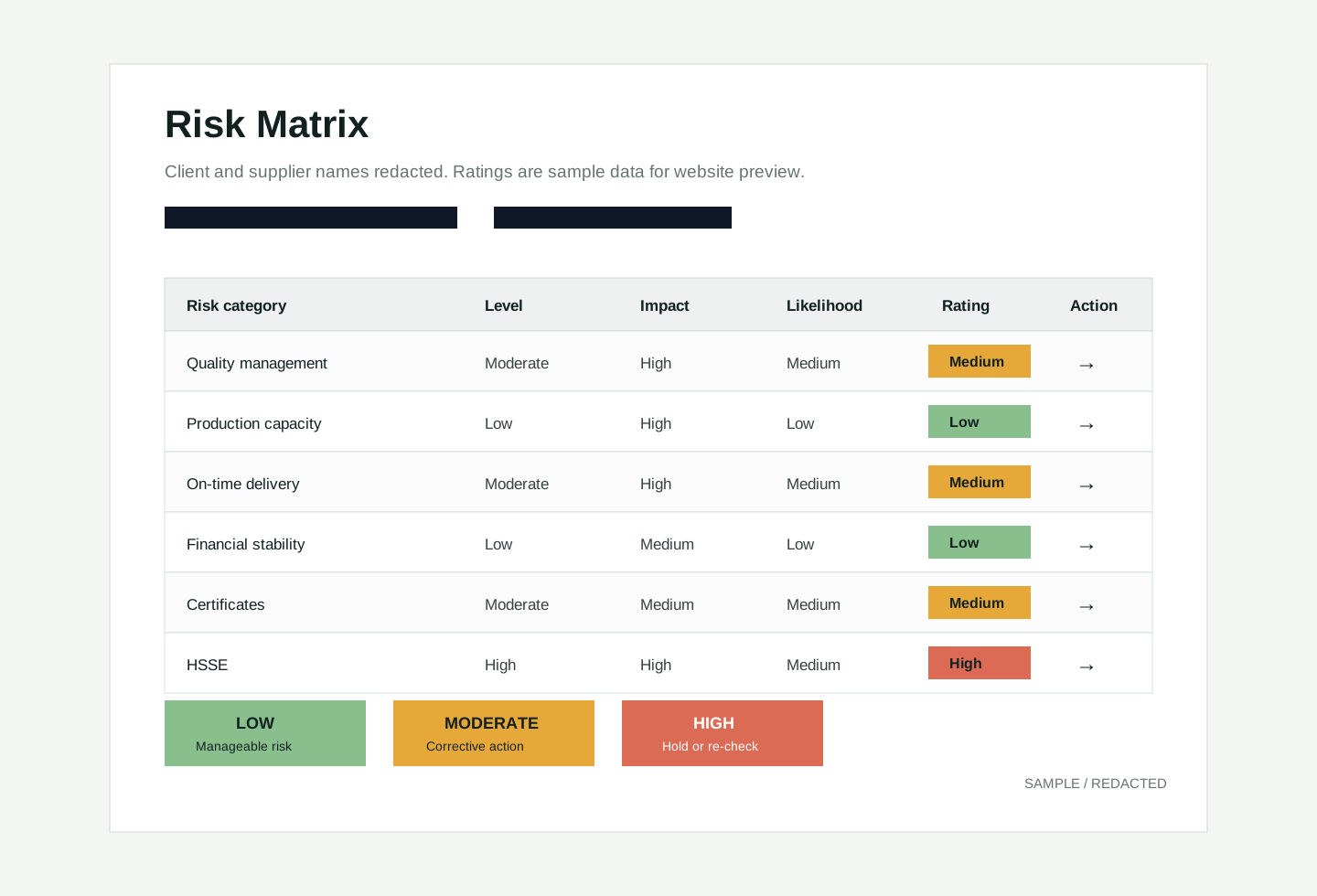
- Material certificates match the product, grade, batch, heat number, lot, or serial number.
- Test reports are linked to supplied goods and not recycled from unrelated orders.
- Standards, declarations, and compliance documents match the target market or project requirement.
- Incoming materials are marked, segregated, and traceable to production records.
- Labels, markings, packing list, and certificates can be reconciled before shipment.
Engineering material modules
Adapt the check to the material package.
Structural and fabricated systems
- Review drawings, material grade, connection details, welds or cast-in items, tolerances, finish, coating, and release criteria.
- Check process ownership for cutting, welding, casting, machining, coating, assembly, and subcontracted steps.
- Confirm traceability from raw material to finished component before irreversible production steps.
Architectural and finishing materials
- Review samples, finish standards, mockups, color/texture control, packaging, installation accessories, and project approval status.
- Check batch consistency, supplier test reports, compliance claims, and how defects are sorted or replaced.
- Confirm packing, labeling, palletizing, and moisture/shock protection for long-distance shipping.
MEP, equipment, and site-support packages
- Review model, rating, serial numbers, nameplates, certificates, spare parts, manuals, warranty terms, and destination-market compliance.
- Define factory acceptance test or functional check where relevant.
- Confirm packaging protects components against moisture, shock, vibration, and missing accessories.
Production and shipment
Schedule risk is often visible before shipment if someone is looking.
- Production schedule includes milestones, not only a final shipment date.
- Progress photos are tied to specific order items, drawings, or production stages.
- Material arrival, bottlenecks, rework, nonconformities, and corrective actions are visible before shipment pressure starts.
- Shipment release decision is explicit: release, release with notes, hold, correct, recheck, or request more evidence.
Release decision
Goods should leave only after evidence, documents, packing, and the release recommendation align with the buyer's acceptance criteria.
Supplier questions
Email template to send before a paid visit.
Subject: Supplier verification information request - [Product / Project]

Dear [Supplier name],

Before we proceed to deposit / production / shipment release, please confirm:

1. The exact legal company name, factory address, and export entity for this order.
2. Which processes are completed in-house and which are subcontracted.
3. The current drawing revision, standard, material grade, finish, tolerance, and acceptance criteria you will use.
4. Recent QA/QC records or anonymized project evidence for a similar product.
5. Material certificates and how they will link to batches, heat numbers, lots, serials, or shipment markings.
6. Proposed inspection hold points before irreversible steps and before shipment.
7. Current production schedule and the main risks that could affect delivery.
8. Photos or videos showing the workshop, relevant equipment, and similar production.
Strong suppliers answer with documents, photos, process details, and named responsibilities. Weak suppliers answer with reassurance, slogans, or pressure to pay quickly.
Review workflow
From online screen to a practical supplier decision.
1. Intake
You submit the supplier link, material category, order stage, destination market, and the concern you want checked.
2. AI-assisted first pass
The online screen highlights obvious risk signals, missing evidence, and useful supplier questions.
3. Human review
Source Rating reviews the context before recommending a desk check, factory visit, inspection, or no paid action.
4. Supplier evidence request
A focused document and question list is prepared so the supplier must prove capability, not only reassure you.
5. Next decision
The outcome is practical: proceed, proceed with controls, verify on site, request corrections, or hold.
Want a quick opinion before ordering an audit?
During launch, submit one supplier link, product category, target country, and main concern. Source Rating can provide a free first-pass risk screen for suitable construction material, equipment, or project-component inquiries.