Procurement Operations
The Cross-Border Procurement Field Guide: Managing Supply Chain Risk from Factory Audit to Port Release
A comprehensive, engineering-grounded operational guide to cross-border procurement across industrial manufacturing, mechanical equipment, and commercial goods. Covers supplier due diligence, factory audits, technical conversion, Incoterms, payment security, third-party inspection, logistics protection, customs compliance, and dispute resolution.
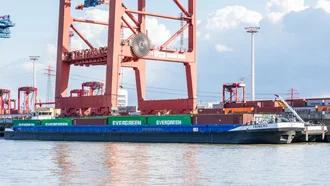
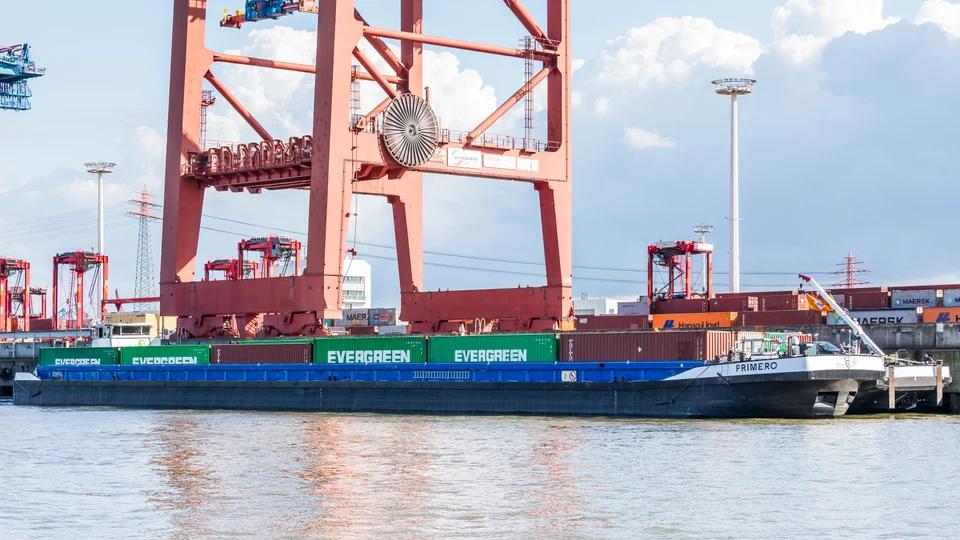

Cross-border procurement fails most expensively not when a supplier disappears with a deposit, but when goods arrive at destination ports out of specification, encumbered by fraudulent certificates, locked in customs classification disputes, or ruined by transit condensation. Across Reddit procurement discussions, LinkedIn supply chain roundtables, and international trade arbitrations, the common thread is rarely bad luck: it is almost always the collapse of a specific handoff between engineering requirements, commercial contract terms, physical quality witness gates, and import compliance rules.
Whether purchasing custom steel castings, CNC-machined titanium components, high-voltage switchgear, bulk polymer resins, or precision hydraulic valves, managing international vendors requires a disciplined operational protocol. This guide synthesizes field-tested verification procedures across the complete nine-stage cross-border procurement lifecycle: from initial vendor due diligence and factory audits, through RFQ engineering conversions and Incoterms selection, to payment escrow, third-party inspection, packaging preservation, customs tariff planning, and dispute mitigation.
1. Global Sourcing & Penetrative Supplier Due Diligence
The initial trap in international sourcing is mistaking digital storefront presence for manufacturing competence. B2B directory gold supplier badges, slick showroom websites, and trade fair booths are marketing collateral that can be purchased for a few thousand dollars. A buyer's first operational duty is piercing the corporate veil before issuing an RFQ or signing an NDA.
Multi-channel sourcing strategies should cross-reference B2B directories with export customs manifest data, industry trade association registries, and national corporate registries. In China, every legitimate enterprise is registered with the State Administration for Market Regulation (SAMR) through the National Enterprise Credit Information Publicity System (NECIPS). Cross-border buyers should pull the official business license (Unified Social Credit Code) and inspect: Registered Capital vs. Paid-in Capital (实缴资本), registered business scope (does it permit 'manufacturing and processing' or merely 'wholesale and trade'?), legal representative, ultimate beneficial owners (UBO), historical name changes, and judicial enforcement or freeze records on platforms like Qichacha or Tianyancha.
| Verification Layer | Primary Evidence Source | Pass / Fail Criteria | Common Fraud / Red Flag |
|---|---|---|---|
| Corporate Entity & Scope | Official registry (SAMR / Companies House / ACRA) | Business scope explicitly authorizes manufacturing; active legal status | Trading-only scope claiming in-house production; registered capital $50k with $0 paid-in |
| Export Licensing | Customs Registration Certificate & EORI / Tax ID | Entity matches customs declaration filer and export VAT refund account | Third-party 'maid' exporter invoicing buyer while contract names unverified entity |
| Judicial Risk & Tax Record | Supreme Court enforcement database & Tax Bureau | Zero unfulfilled court judgments; Grade A/B tax compliance rating | Unresolved debt executions, frozen bank accounts, or repeated labor arbitration disputes |
| Physical Asset Verification | Utility bills (electricity kVA load) & Land registry | Industrial power consumption aligns with claimed monthly tonnage | 'Showroom factory' leasing a corner office while subcontracting to unregulated workshops |
To distinguish a true tier-1 manufacturer from a broker or 'showroom factory,' request the facility's electric utility bills for the preceding six months and high-voltage transformer capacity ratings. A CNC machining workshop with 30 machining centers cannot operate on a 20 kVA commercial office power connection. Furthermore, inspect the facility's fixed asset register and tooling ownership: brokers subcontracting to unregulated workshops will hesitate when asked for machinery serial numbers and calibration logs for internal CMMs.
2. Factory Audits & Quality Management System Penetration
Possession of an ISO 9001, ISO 14001, or ISO 45001 certificate proves only that an organization engaged an auditor at some point in the past three years. Paper-only quality management systems are ubiquitous. An effective technical audit must penetrate the operational shop floor and verify that documented quality procedures dictate daily behavior.

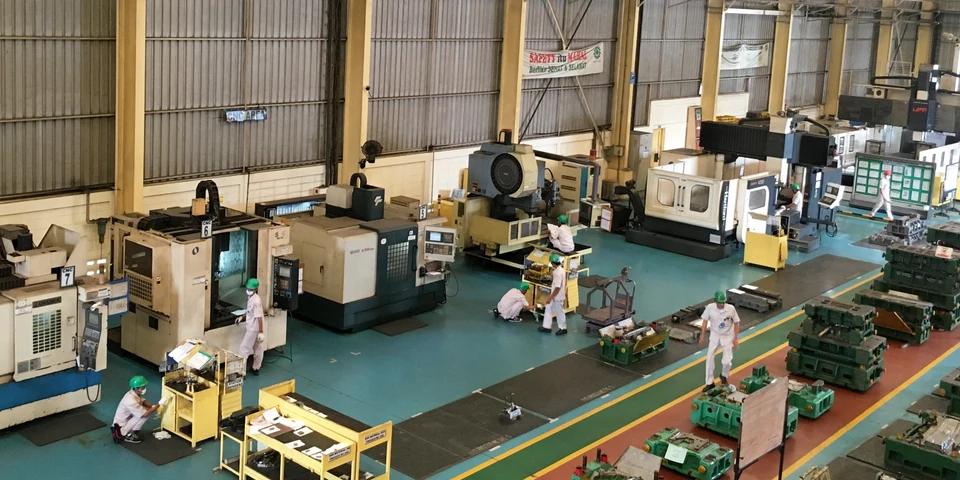

A rigorous factory audit evaluates four foundational pillars:
- Process Repeatability & 5S: Trace incoming raw material quarantine, segregated scrap bins, red-tag non-conforming holding areas, and active preventive maintenance logs on primary production equipment.
- Tool Wear & In-Line Poka-Yoke: Audit CNC tool life monitoring systems, automated go/no-go gauging fixtures, and sensor-based error proofing rather than relying solely on end-of-line manual visual inspection.
- ESG & Social Compliance: Verify Sedex SMETA, BSCI, or SA8000 compliance. Audit electronic punch-card time records against bank salary payment vouchers to detect forced overtime, hazardous chemical storage SDS compliance, and valid municipal wastewater/emission discharge permits.
- Capacity Saturation & OEE: Calculate the supplier’s Overall Equipment Effectiveness (OEE = Availability x Performance x Quality). If a vendor is running at 95% capacity saturation with an active order backlog, taking on your volume will trigger unauthorized third-party subcontracting.
3. Technical Specification Conversion, RFQ & Enforceable Contracts
Engineering miscommunication across national boundaries is a prime generator of scrap. Overseas buyers frequently specify domestic standards (such as ASTM, ASME, ANSI, or SAE) to Asian suppliers accustomed to GB/T or ISO, or European buyers specify EN/DIN. Simply stating 'equivalent material acceptable' is an invitation to failure.
Material standards rarely map 1:1. For instance, substituting ASTM A36 with Chinese Q235B is common, but while Q235B specifies Charpy V-notch impact energy at +20 deg C, ASTM A36 does not mandate impact testing unless supplementary requirement S5 is called out. Similarly, comparing stainless steels: 316L requires carbon <= 0.030%, whereas standard 316 allows up to 0.080%. In geometric tolerancing, omitting the general tolerance standard (e.g. ISO 2768-mK or ISO 13920-BF for welded structures) allows the supplier's default shop practice to govern, creating unresolvable fit-up discrepancies.
To achieve commercial leverage, implement a bottom-up 'Should-Cost' model. Strip the quotation into verifiable cost components:
- Raw Material Net Weight + Process Scrap Factor: Raw material index price multiplied by blank weight, adjusted for scrap recovery credit.
- Machine Hour Rates (MHR): Depreciation, power kVA, tooling consumable cost, and operator wages per minute of cycle time.
- Finishing & Treatment: Galvanizing, anodizing, heat treatment, or powder coating per kg or surface area.
- Export Packaging & Port Drayage: Palletizing, VCI bagging, container drayage, and terminal handling charges (THC).
- Tax Rebate Deduction: For Chinese exporters, deducting the statutory export VAT refund (up to 13%) from domestic production costs.
- Net Margin: Benchmarking reasonable net factory margins between 8% and 12%.
Every purchase agreement must be executed as a bilingual contract (e.g. English and Chinese) with an explicit clause establishing which language prevails in legal interpretation. Crucially, the contract must incorporate Liquidated Damages (LDs) for delivery delays (typically 0.5% of total PO value per week of delay, capped at 10% to 15%), mandatory warranty retainage (holding 5% to 10% for 12 to 24 months), and an enforceable NNN Agreement (Non-disclosure, Non-use, Non-circumvention) that prevents the factory from selling your custom designs directly to competitors or bypassing your business.
4. Incoterms 2020: Risk Boundaries, Insurance & The CIF Trap
The International Chamber of Commerce (ICC) Incoterms 2020 rules define the precise physical point where cost, operational responsibility, and risk of loss transfer from seller to buyer. Misunderstanding these boundaries generates severe unbudgeted expenses.
| Incoterm 2020 | Risk Transfer Point | Freight & Export Clearance | Import Clearance & Duty | Buyer Risk Exposure |
|---|---|---|---|---|
| EXW (Ex Works) | At seller's factory floor | Buyer arranges all drayage, export clearance & freight | Buyer responsible | High: buyer must handle foreign export customs and loading damage |
| FOB (Free On Board) | On board vessel at named port of shipment | Seller clears export; buyer contracts ocean carrier | Buyer responsible | Optimal balance: buyer controls freight carrier, route, and destination fees |
| CIF (Cost, Insurance & Freight) | On board vessel (risk); port of arrival (cost) | Seller pays ocean freight and minimum insurance | Buyer responsible | Dangerous trap: seller selects freight forwarder who extorts buyer with CISF fees |
| DAP (Delivered at Place) | On arriving vehicle at buyer's facility, unloaded | Seller pays all transport to destination site | Buyer pays import duty & tax | Moderate: seller bears transit risk; buyer must clear customs promptly |
| DDP (Delivered Duty Paid) | At buyer's destination premises, ready for unloading | Seller handles end-to-end logistics, insurance & freight | Seller is Importer of Record & pays all duties | Misleading: foreign seller often lacks legal import status or misdeclares VAT |
Beware the classic CIF Destination Trap: suppliers offer an artificially low ocean freight rate under CIF terms because their origin forwarder pays them a kickback. Upon cargo arrival, the forwarder's destination agent withholds the Delivery Order (D/O) until the buyer pays exorbitant destination charges, known as China Import Service Fees (CISF), alongside inflated terminal handling fees. For ocean freight, professional industrial importers almost universally prefer FOB, allowing them to nominate their own vetted freight forwarder, negotiate transparent local destination charges, and maintain operational control over container detention and demurrage terms.
When purchasing marine cargo insurance under CIF or CIP, sellers are required by default under Incoterms 2020 to supply Institute Cargo Clauses (C) or (A) respectively. Buyers should insist on ICC (A) coverage ('all risks' of loss or damage, subject to standard exclusions) with Institute War Clauses and Institute Strikes Clauses attached, valued at 110% of CIF value. For engineered machinery, include the Institute Replacement Clause to ensure repair and replacement of damaged electrical or mechanical modules rather than fighting total-loss determinations.
5. International Payment, Banking Security & BEC Fraud Prevention
Financial architecture in cross-border trade balances supplier cash flow demands against buyer non-performance risks. The primary settlement tools are Letters of Credit (L/C) and Telegraphic Transfer (T/T), each carrying distinct operational vulnerabilities.
Under Letters of Credit (UCP 600), banks deal exclusively in documents, not physical goods. When issuing an L/C, watch for Soft Clauses inserted by bad-faith counterparties—such as stipulating that payment is conditional upon an inspection certificate signed by an individual whose signature must be authenticated by the seller's bank, or presentation of a bill of lading from an unnamed charter vessel. Discrepancies as minor as a misspelled typographical error in a commercial invoice or packing list will trigger bank discrepancy fees ($75–$150 per instance) and allow the issuing bank to hold payment.
For ongoing procurement under T/T, standard milestone structures require 30% down payment upon PO signing (to purchase raw materials), 40% upon successful completion of third-party pre-shipment inspection (PSI), and 30% balance against the surrender of the copy Ocean Bill of Lading (B/L) and export customs declaration. On large capital equipment, never release advanced deposits without securing an Advance Payment Guarantee (APG) or Performance Bond issued by a tier-1 international bank under ICC URDG 758 rules.
A severe operational threat facing global procurement is Business Email Compromise (BEC). Attackers breach vendor email servers or register look-alike domains (e.g. `supplier-corp.com` vs `supplier-c0rp.com`), monitor production schedules, and intercept final balance invoicing. The buyer receives an official-looking revised invoice citing an annual tax audit, anti-money laundering review, or banking system upgrade, requesting funds to be wired to a new account in Hong Kong, Singapore, or Dubai.
Every procurement department must institutionalize an ironclad Dual-Channel Out-of-Band Verification Protocol: any change to supplier bank accounts, beneficiary names, or intermediary routing details triggers an immediate payment freeze until verbally verified via a pre-established landline phone number or secure video conference with the supplier's Chief Financial Officer. Never verify banking changes using phone numbers or contacts provided in the bank-change notification email itself.
6. Production Supervision & Third-Party Inspection (TPI / QA/QC)
Inspection is not an event scheduled three days before container loading; it is a continuous quality assurance process governed by a formalized Inspection and Test Plan (ITP). An ITP defines every manufacturing step, referenced acceptance criteria, responsible inspection party, and verification gates.



ITP gates are categorized into three mandatory levels:
- Hold Point (H): Mandatory witness point. Manufacturing cannot proceed past this stage without written formal sign-off by the buyer or designated third-party inspector (e.g. raw material melt test verification, hydrostatic pressure testing of pressure vessels).
- Witness Point (W): An inspection point where the inspector has the right to observe testing. If the inspector fails to attend after statutory 48-hour notice, production may proceed.
- Review Point (R): Documentary audit of test records, welding procedure qualifications (WPS/PQR), non-destructive testing (NDT) reports, or heat treatment furnace charts.
When verifying metallurgical supplies, demand EN 10204 Type 3.1 inspection certificates (validated by the manufacturer’s authorized inspection representative independent of production) or Type 3.2 (co-signed by an independent third-party inspection agency). Check heat numbers stamped on physical products against the original primary melt shop records, and conduct random Positive Material Identification (PMI) using handheld X-ray fluorescence (XRF) or optical emission spectrometry (OES) to prevent grade substitution.
For batch manufacturing, apply statistical sampling standard ISO 2859-1 (ANSI/ASQ Z1.4) using General Inspection Level II, Single Sampling Plans for Normal Inspection. Define distinct Acceptance Quality Limits (AQL):
| Defect Classification | AQL Threshold | Typical Field Examples | Batch Disposition |
|---|---|---|---|
| Critical Defects | 0.0 (Zero Tolerance) | Safety hazards, sharp metal burrs, non-flame retardant wiring, toxic coatings | A single defect triggers 100% batch rejection and stop-work order |
| Major Defects | 1.0 or 1.5 | Dimensional out-of-tolerance affecting assembly, missing threads, paint flaking | Accept/Reject numbers dictated by ISO 2859-1 sample size code letter |
| Minor Defects | 4.0 | Cosmetic surface scratches, packaging label misalignment, minor color shade variation | Accepted within statistical tolerance; feedback logged for continuous improvement |
7. International Logistics, Preservation Packaging & B/L Risk
Cargo that leaves a factory in pristine condition can arrive at destination as scrap due to transit vibration, improper lashing, or container rain (sweat). Maritime transport exposes cargo to severe temperature cycling, high humidity, and cyclic G-forces.


Wooden dunnage and crating must comply with international standard ISPM 15 (International Standards for Phytosanitary Measures No. 15). Solid wood packaging material (SWPM) must undergo certified heat treatment (HT) or dielectric heating (DH) and bear the permanent IPPC cloverleaf stamp displaying country code, facility registration, and treatment method. Using non-compliant solid wood skids or uncertified dunnage blocks will cause customs authorities in the United States, Europe, or Australia to refuse entry and order immediate cargo re-export or destruction at the buyer's expense. Where possible, mandate engineered plywood (exempt from ISPM 15) or steel transport skids.
For machined or unpainted steel goods, deploy Volatile Corrosion Inhibitor (VCI) film hermetically heat-sealed around the goods, accompanied by engineered desiccant dosage calculated according to standard DIN 55474 or MIL-D-3464E:
Desiccant Engineering Formula: n = (V x b + m x c + A x e x t) / a, where n represents desiccant units required, V is enclosed container air volume (m3), b is moisture content of air, m is mass of hygroscopic packaging materials (wood, cardboard), c is moisture factor of packaging, A is barrier film surface area (m2), e is water vapor transmission rate (WVTR), t is transit duration in days, and a is desiccant absorption capacity per unit. Never guess desiccant quantities based on rule of thumb.
Regarding shipping documentation, distinguish between Master Bill of Lading (MBL) issued directly by the shipping line and House Bill of Lading (HBL) issued by an NVOCC freight forwarder. When an HBL is used, ensure the forwarder is bonded (e.g. licensed by the U.S. Federal Maritime Commission) to prevent unauthorized cargo release without the original bill of lading. For streamlined digital operations, adopt electronic Bills of Lading (eBL) backed by MLETR-compliant digital platforms.
8. Customs Clearance, Tariff Planning & Global Trade Compliance
Customs clearance is a legal declaration of value, classification, and origin governed by administrative penalties. The most persistent compliance risks arise from Harmonized System (HS) code classification discrepancies, preferential origin rules, and evolving non-tariff trade barriers.
Suppliers often provide an HS code optimized for their domestic export tax rebate or simplified filing. However, import customs authorities classify goods strictly according to the General Rules for the Interpretation (GRI) of the Harmonized System. GRI 1 establishes that classification is determined by the terms of the headings and relative section or chapter notes. For multi-component or complex industrial machinery, apply GRI 3(b) (essential character) or GRI 2(a) (incomplete or unassembled articles). Never accept a vendor's HS code without obtaining a formal Binding Tariff Information (BTI) ruling from EU customs or a Binding Ruling from U.S. Customs and Border Protection (CBP CROSS).
In tariff planning, leverage Preferential Certificates of Origin (such as RCEP COO or Form E for ASEAN trade) only when the product meets documented Regional Value Content (RVC) or Change in Tariff Classification (CTC) criteria. Attempting to circumvent Anti-Dumping Duties (ADD) or Countervailing Duties (CVD) by routing goods through third countries (such as Vietnam, Malaysia, or Thailand) without substantial transformation violates customs anti-circumvention statutes (such as the Enforce and Protect Act - EAPA in the U.S.) and leads to criminal forfeiture, retroactive duty penalties, and corporate debarment.
Modern supply chains must also navigate ESG trade compliance. The European Union's Carbon Border Adjustment Mechanism (CBAM) mandates quarterly reporting of embedded direct (Scope 1) and indirect (Scope 2) greenhouse gas emissions for imported iron, steel, aluminum, cement, fertilizers, and hydrogen. Relying on default emission values triggers punitive carbon certificate purchase costs; buyers must collect installation-specific emissions monitoring data directly from primary smelting operations. Concurrently, complying with the Uyghur Forced Labor Prevention Act (UFLPA) and the EU Forced Labour Regulation requires comprehensive multi-tier supply chain mapping, proving chain of custody down to the raw ore, silica, or cotton farm level.
9. Cargo Disputes, Insurance Claims & International Arbitration
When cargo arrives damaged, deficient, or non-functional, the buyer's actions within the first 72 hours determine whether financial losses can be recovered or whether claims are extinguished by statutory time bars.
Under the Hague-Visby Rules (and U.S. COGSA), written notice of loss or damage must be served on the carrier at the time of delivery, or within three days if damage is non-apparent. Simultaneously notify the marine cargo underwriter and commission an independent Joint Outturn Survey conducted by an accredited maritime surveyor (such as Lloyd's Agency, SGS, or Bureau Veritas). The survey report establishes the precise cause of damage (e.g. seawater ingress through defective hatch seals, violent container racking during transit, or inadequate internal lashing) and fixes liability between carrier, packaging provider, and insurer.
If defective goods must be returned to an overseas factory for repair or remanufacturing, never re-export without formal customs documentation. For ordinary cross-border commercial shipments returned to China, file under Customs Trade Mode 1300 (Goods for Repair / 修理物品) under an approved repair bond or security deposit; distinguish this from Code 4600, which applies strictly to finished-product returns under inward processing trade. Goods must enter, undergo processing, and re-export within the statutory six-month timeframe to avoid re-imposition of full import tariffs and VAT upon subsequent re-entry.
For contractual breaches, litigation in domestic courts against an overseas entity is notoriously ineffective due to lack of reciprocal enforcement treaties. Every international procurement contract should specify binding dispute resolution via institutional international arbitration. Recommended arbitration forums include:
- CIETAC (China International Economic and Trade Arbitration Commission): The preferred institution for disputes involving Chinese mainland entities, seated in Beijing or Shanghai.
- HKIAC (Hong Kong International Arbitration Centre): Renowned for rapid interim measures and mutual enforcement arrangements with mainland Chinese courts.
- SIAC (Singapore International Arbitration Centre): A leading global neutral forum with highly developed commercial and emergency arbitrator procedures.
- ICC International Court of Arbitration (Paris / Geneva / London): The premier global institution for multi-jurisdictional engineering and supply chain contracts.
Arbitral awards issued under these institutions are enforceable globally across 170+ sovereign nations under the United Nations Convention on the Recognition and Enforcement of Foreign Arbitral Awards (The New York Convention 1958). Structure your arbitration clause to specify the administering institution, seat of arbitration, governing substantive law, language of proceedings, and number of arbitrators.
The Cross-Border Buyer's Master Operational Checklist
- Due Diligence: Verified corporate legal scope, paid-in capital, and utility power load on official corporate registers; confirmed actual manufacturing ownership vs trading brokerage.
- Technical Alignment: Executed bilateral standard cross-reference matrix (ASTM vs GB/T vs ISO); defined general tolerance standards (ISO 2768) and mandatory supplementary test requirements.
- Commercial Contract: Signed bilingual agreement with liquidated damages for delay (0.5%/week), warranty retainage (5–10%), and comprehensive NNN intellectual property protection clauses.
- Incoterms Selection: Contracted under FOB terms with nominated freight forwarder; secured ICC (A) all-risks marine insurance at 110% CIF value with Institute Replacement Clause.
- Financial Controls: Structured milestone payments against verified third-party inspection sign-off; enforced out-of-band dual-channel phone verification for any banking detail changes.
- Quality Assurance: Implemented formalized ITP with defined Hold (H) and Witness (W) points; conducted ISO 2859-1 Level II sampling inspection; verified EN 10204 3.1/3.2 certificates with PMI testing.
- Packaging & Logistics: Confirmed ISPM 15 certified heat-treatment stamps on wood packaging; calculated DIN 55474 desiccant dosage; verified container 7-point structural inspection and lashing.
- Customs & Compliance: Obtained formal binding tariff ruling (BTI/CROSS); audited supply chain for UFLPA/EU forced labor traceability and collected verified installation emissions for CBAM.
- Dispute Readiness: Designated institutional arbitration (CIETAC/HKIAC/SIAC) under the New York Convention; documented immediate joint survey protocol for destination cargo discrepancies.
By replacing assumptions with documented engineering verifications, clear risk allocations, and objective witness gates, cross-border buyers transform international supply chains from high-stakes gambles into predictable, highly competitive manufacturing extensions.
Reading notes
Authoritative trade, quality and legal references
Primary international trade rules, quality standards, customs statutes, and arbitration conventions verified for cross-border industrial procurement operations (18 November 2026).
International Chamber of Commerce (ICC)
Defines buyer and seller risk transfer boundaries, carriage obligations, and insurance coverage requirements.
International Organization for Standardization
Primary statistical sampling scheme indexed by acceptance quality limit (AQL) for lot-by-lot inspection.
European Committee for Standardization (CEN)
Standard defining Type 2.1, 2.2, 3.1, and 3.2 material test certificates and independent validation requirements.
U.S. Customs and Border Protection
Statutory rules governing tariff classification and classification dispute resolutions.
European Commission Taxation and Customs Union
Regulatory requirements for embedded emissions reporting and installation-level data verification.
Federal Bureau of Investigation
Authoritative law enforcement guidelines on identifying and mitigating invoice tampering and account routing fraud.
International Maritime Organization
Global engineering guidelines for safe container stuffing, cargo securing, and weight distribution.
United Nations Commission on International Trade Law (UNCITRAL)
International treaty enabling cross-border recognition and enforcement of arbitral awards across 170+ member states.
Continue the decision
Related buyer guides
The PO Names a Factory. The Invoice Names a Trader. Who Is the Seller?
How to verify legal contracting entities, exporters, and banking beneficiaries across split supplier arrangements.
The Certificate of Conformance Blind Trust Trap: Why Overseas Buyers Accept Mill Sheets That Fail at Port
Crucial distinction between commercial assertion and verified metallurgical test traceability under EN 10204.
The Carrier Supports an eBL. Can Your Buyer Actually Collect the Cargo?
Operational requirements, platform interoperability, and legal recognition for electronic bills of lading.
Your Quote Says DDP. Whose Name Goes on the Import Declaration?
Why foreign suppliers cannot easily serve as Importer of Record and the hidden VAT risks of DDP terms.