Machinery & Electrical
The Machine Spun in the Video. Why Won't It Run on Your Floor?
Overseas machinery buyers often release 90% of contract payments after watching a 30-second dry-cycle video, only to face AHJ red-tagging, unlisted switchgear, PLC password locks, and commissioning abandonment. Here is how to govern FAT and SAT with an airtight engineering protocol.
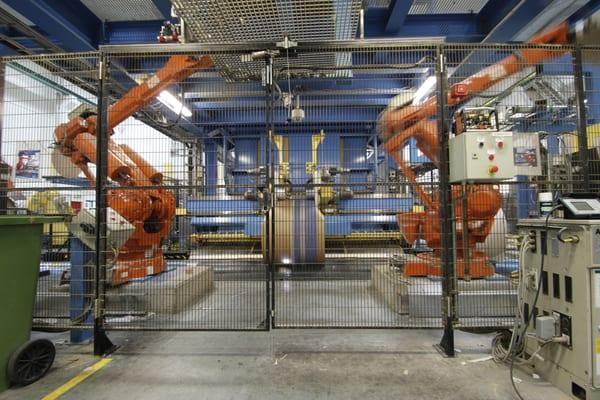
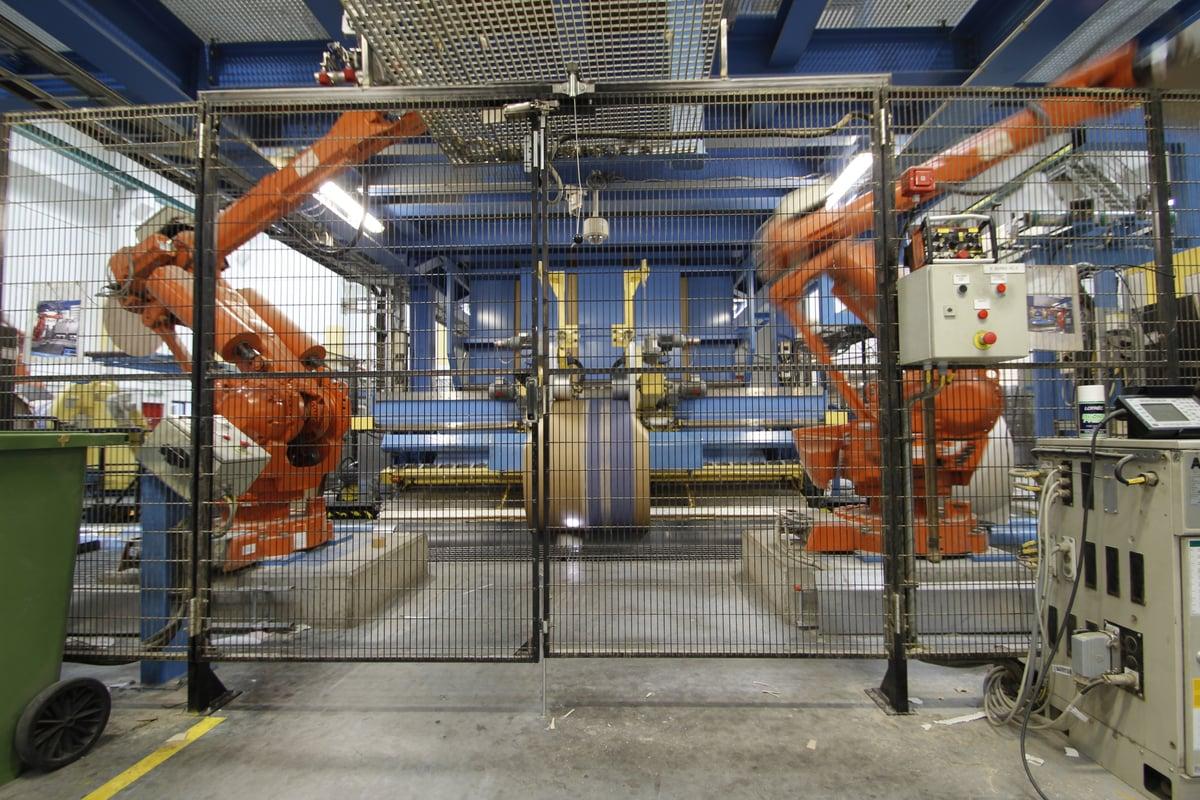

Why cross-border buyers of automated machinery, packaging lines, and electrical control cabinets must govern Factory Acceptance Testing (FAT) and Site Acceptance Testing (SAT) with technical inspection matrices rather than smartphone videos.
A manufacturing company in North America or Western Europe orders a $350,000 custom packaging line, automated assembly cell, or multi-axis CNC machine from an industrial OEM in China. The commercial contract follows a standard milestone schedule: 30% advance deposit upon signing, 40% intermediate progress payment upon fabrication of major mechanical sub-assemblies, 20% upon Factory Acceptance Testing (FAT) prior to packing, and a final 10% commercial retention following Site Acceptance Testing (SAT) at the buyer's plant.
Eight months into production, the supplier sends a series of high-definition smartphone videos via WeChat or WhatsApp. The camera pans across pristine sheet-metal covers, polished stainless-steel hoppers, and an operator pressing a green pushbutton on a color touchscreen. Servos hum, pneumatic cylinders stroke back and forth, and a conveyor belt turns smoothly. The factory sales director attaches a pro-forma commercial invoice and demands immediate wire transfer of the 20% FAT milestone so the crating team can seal the shipping containers.
Under schedule pressure from operations executives waiting to commission a new production line, the procurement team signs the pre-shipment release and wires the funds. Six weeks later, three 40-foot high-cube containers arrive at the destination plant. When the uncrated machinery is rigged into place and the utility feeds are dropped from the plant ceiling, the project disintegrates into an operational nightmare:
- Electrical Code Red-Tagging: The local municipal electrical inspector (Authority Having Jurisdiction, or AHJ) visits the plant, inspects the main control panel, and refuses to energize the facility. The panel contains domestic Chinese contactors and circuit breakers lacking Nationally Recognized Testing Laboratory (NRTL) listings, lacks a calculated Short-Circuit Current Rating (SCCR), and uses unapproved conductor color coding. A certified field evaluation or panel rebuild will cost $35,000 and delay start-up by two months.
- The Thermal and Material Jam: When temporary power is rigged and actual customer feedstock (variable-thickness carton board, abrasive powder, or stamped metal blanks) is introduced, the machine jams within 12 minutes. Bearings overheat, linear guides bind due to thermal expansion under continuous load, and optical sensors are blinded by factory ambient dust.
- The Software Ransomware: The plant automation engineer connects a laptop to diagnose why an interlocked servo axis throws a continuous motion fault. They discover that the Siemens or Allen-Bradley PLC program is password-locked with proprietary source protection. Worse, an internal timer subroutine halts the machine after 200 cumulative operating hours. The overseas supplier refuses to release the uncompiled ladder logic, HMI project files, or PLC unlock keys until the final 10% retention is paid in full.
- The Overseas Commissioning Void: The contract vaguely stated that the seller would provide 'on-site commissioning support.' But with 90% of the funds already collected, the OEM claims their engineers cannot obtain business visas, demands $1,200 per day in discretionary per diems plus business-class airfare, or sends a junior mechanical assembler who speaks no English and cannot read an electrical schematic.
This pattern plays out continuously across industrial manufacturing sectors. It is not an inevitable hazard of international sourcing; it is the predictable consequence of confusing a 30-second cosmetic 'dry run' with an auditable engineering milestone. To prevent multimillion-dollar capital equipment stranded on plant floors, buyers must enforce a comprehensive engineering protocol across electrical compliance, wet-run endurance, software escrow, and contractual holdbacks.
1. The electrical & safety code ambush: NFPA 79 / UL 508A vs EN 60204-1
The most frequent reason imported industrial machinery is stopped at destination facilities is electrical and functional safety non-compliance. Machine builders in developing manufacturing hubs naturally fabricate control panels according to domestic habits or regional GB/T standards. However, regulatory frameworks in North America and the European Union operate under entirely different statutory principles.
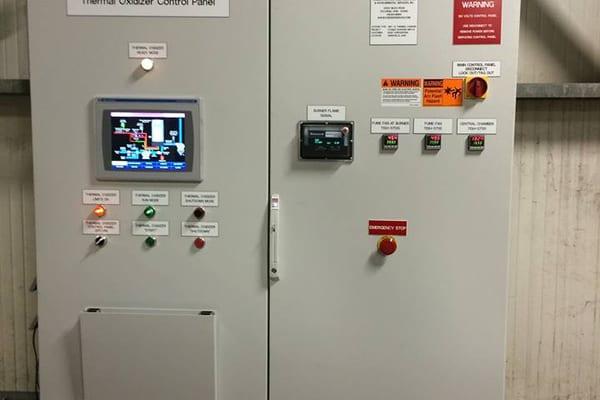
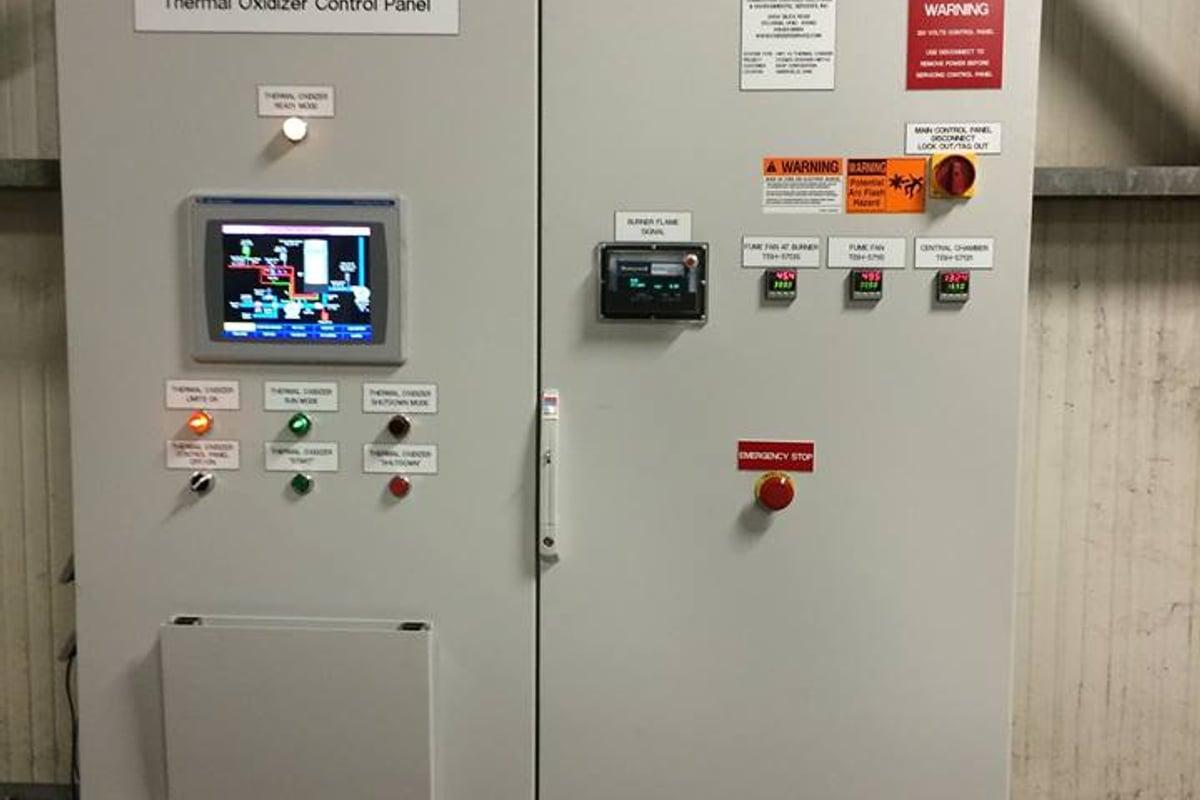

In the United States, industrial equipment approval is governed by the Occupational Safety and Health Administration (OSHA) 29 CFR 1910.303(a) and Section 1910.399, which mandate that all electrical equipment must be 'approved'—meaning listed, labeled, or certified by an OSHA-recognized NRTL (such as UL, CSA, or Intertek/ETL). Control panels must conform to NFPA 79 (Electrical Standard for Industrial Machinery) and UL 508A (Standard for Industrial Control Panels).
Five specific electrical defects regularly trigger immediate AHJ red-tags on imported Asian machinery:
- Unlisted and Unrecognized Components: Domestic Chinese contactors, terminal blocks, miniature circuit breakers (MCBs), and switching power supplies frequently bear CCC (China Compulsory Certificate) marks or generic CE stamps. CCC has zero legal standing in North America. Branch-circuit overcurrent protective devices must be certified to UL 489; supplementary protectors (UL 1077) cannot be substituted for branch protection.
- Default 5 kA Short-Circuit Current Rating (SCCR): Under National Electrical Code (NEC / NFPA 70 Article 409) and UL 508A Supplement SB, industrial control panels must display an assembly SCCR. If an OEM fails to perform coordinated component calculations or includes an unrated terminal block or power meter, the panel defaults to an SCCR of 5,000 amperes (5 kA). Connecting a 5 kA panel to an industrial facility supply bus capable of delivering 35 kA or 65 kA available fault current violates electrical code and presents an extreme catastrophic arc-flash and fire hazard.
- Conductor Color-Coding Violations: NFPA 79 Section 13.2.4 establishes rigid wiring color standards. Black conductors are reserved for ungrounded AC line and load circuits at line voltage. Red is required for ungrounded AC control circuits at less than line voltage. Blue is required for ungrounded DC control circuits (e.g., +24V DC). Blue with a white stripe is required for grounded DC control circuits (0V DC). Yellow or orange is strictly required for interlocking control circuits that remain energized from an external source when the main panel disconnect is switched off. Domestic OEMs routinely wire entire panels using black, red, or gray wire indiscriminately, requiring full cabinet rewiring.
- Missing Door Bonding Jumpers: Under UL 508A Section 63, enclosure doors containing electrical equipment (such as HMIs, pilot lights, or pushbuttons operating above 30V AC or 60V DC) must have a dedicated copper bonding jumper conductor mechanically fastened to the main chassis ground busbar. Reliance on mechanical door hinges or zinc-plated latches for electrical bonding is strictly prohibited.
- Functional Safety Architecture Failure: Under European standard EN ISO 13849-1 and IEC 62061, emergency stop pushbuttons and safety light curtains cannot simply feed standard digital inputs on a generic PLC. They must be routed through dual-channel, cross-monitored safety relays or an approved safety PLC rated to the required Performance Level (PLr d or e). Wiring an E-stop button directly into an unrated micro-PLC fails European Machinery Directive compliance.
Buyers sourcing equipment destined for the European Union face a parallel trap: the 'Self-Declaration CE' illusion. Many Chinese fabricators apply a CE label to the machine chassis and provide a one-page 'Declaration of Conformity' referencing the Low Voltage Directive (2014/35/EU). Under the Machinery Regulation (EU) 2023/1230 (superseding Directive 2006/42/EC), machinery must be accompanied by an exhaustive Technical Construction File (TCF), including a quantified risk assessment per EN ISO 12100, noise emission reports, electrical safety verification per EN 60204-1, and Notified Body involvement for high-risk machinery listed in Annex I.
2. The 'dry run' vs 24-hour continuous wet-run endurance test
When a factory conducts an in-house demonstration for a visiting inspector or records a short video, they perform a cold dry run. The machine cycles without raw material, without continuous heat generation, and without mechanical load. Approving a machine based on a dry run is the equivalent of buying a commercial aircraft because the cockpit displays illuminate on ground battery power.
Complex machinery behaves fundamentally differently under continuous mechanical and thermal saturation:
- Thermal Expansion and Axis Preload: High-speed ball screws, linear guideways, precision spindle bearings, and enclosed gearboxes generate frictional heat. In high-precision packaging or CNC cutting machinery, it takes between 3 to 6 hours of continuous cycling for rotating assemblies to reach thermal equilibrium. If bearing preloads or cooling circuits are improperly sized, thermal growth causes balls to bind inside runner blocks, triggering servo drive over-torque faults (I²t alarms) that never appear during a 10-minute demonstration.
- Hydraulic and Pneumatic Leak Decay: Hydraulic systems experience viscosity thinning as fluid temperatures rise from 20°C to operating bands of 55°C–65°C. Seals that hold pressure during cold testing can experience catastrophic internal bypass when hot. In pneumatic systems, undersized valve manifolds or inadequate compressor piping create cumulative line pressure drops during high-frequency actuation, causing grippers to drop parts at 80% speed.
- Raw Material Variability: Machine builders prefer testing with virgin, unwrinkled, perfectly flat sample materials. In the real world, corrugated cardboard absorbs ambient humidity; stamped steel blanks have burrs and coil oil; plastic granules carry electrostatic charges. If the buyer does not ship authentic production feedstock to the overseas factory for the FAT, the machine's mechanical clearances and vacuum suction cups will fail completely upon arrival.
To establish auditable proof of machine performance, the FAT protocol must govern two statistical benchmarks:
First, the Process Capability Index ($C_{pk}$): Rather than measuring five consecutive parts, the supplier must execute a continuous run of at least 300 to 500 parts, measuring critical dimensions across the entire batch to verify statistical process stability:
$$C_{pk} = \min\left(\frac{\text{USL} - \mu}{3\sigma}, \frac{\mu - \text{LSL}}{3\sigma}\right)$$
Where $\text{USL}$ is the Upper Specification Limit, $\text{LSL}$ is the Lower Specification Limit, $\mu$ is the sample mean, and $\sigma$ is the sample standard deviation. An acceptable machinery FAT must achieve a $C_{pk} \ge 1.33$ (representing a 4-sigma industrial quality capability with fewer than 64 defects per million opportunities). For safety-critical automotive, medical, or precision engineering parts, contracts should mandate $C_{pk} \ge 1.67$.
Second, Overall Equipment Effectiveness (OEE): During an uninterrupted 8-hour continuous wet-run endurance test at 100% rated design speed, the system must achieve an overall OEE of at least 85%:
$$\text{OEE} = \text{Availability} \times \text{Performance} \times \text{Quality} \ge 0.85$$
Any unplanned stoppage exceeding 5 minutes (due to mechanical jams, sensor misreads, or motor trips) automatically resets the endurance clock back to hour zero. If an OEM cannot run their own machine continuously for 8 hours in their own assembly hall, there is zero mathematical probability it will run reliably on your plant floor.
3. The software, PLC ransomware & cyber integrity trap
In modern automated machinery, mechanical steel is secondary to control firmware. The true intellectual property and operational control reside in the programmable logic controller (PLC), human-machine interface (HMI), and variable frequency drives (VFDs).
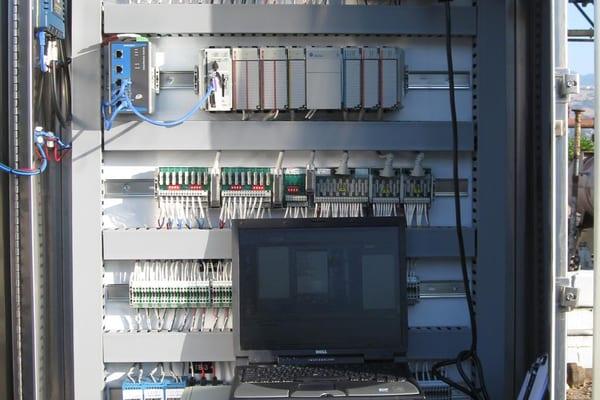
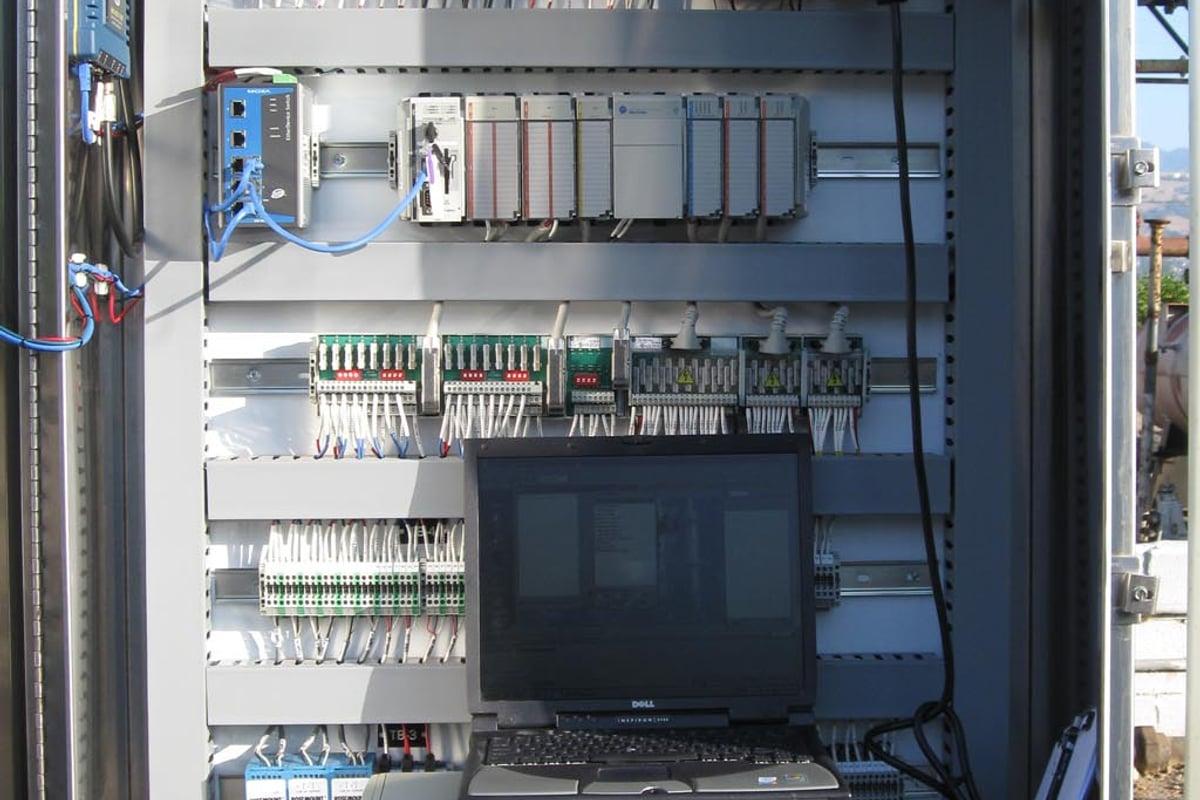

When buyers fail to define explicit software deliverables in their procurement contracts, overseas machine builders frequently exploit software locks to hold equipment hostage:
- Proprietary Block Password Protection: In Siemens TIA Portal, Rockwell Studio 5000, or Mitsubishi GX Works, OEMs apply 'Know-How Protection' or password keys to Function Blocks (FBs) and Ladder Logic routines. The buyer receives a machine that runs, but cannot view, edit, or troubleshoot internal logic when a limit switch or encoder faults.
- The Hardcoded RTC 'Time Bomb': Unscrupulous software contractors embed logic routines comparing the PLC's internal Real-Time Clock (RTC) or elapsed run-hour counter against a hardcoded constant (e.g., 500 operating hours). Once triggered, an internal marker bit disables all servo enables and displays an opaque 'System Exception Code 0x9A'. The OEM then demands full release of the 10%–15% retention warranty holdback before providing the 'special update patch' that resets the bit.
- Missing Tag Comments and Variable Databases: The OEM delivers compiled binary files (.hex or .bin) or unannotated PLC code where variable tags are named sequentially (`Tag_001`, `Tag_002`, `DB1.DBD4`) without English descriptions, rung comments, or machine state descriptions. Local plant technicians are completely unable to maintain the machine without hiring the original OEM at predatory rates.
To defeat software extortion, the FAT protocol must incorporate an immutable Clean-Laptop Upload & Verification Gate:
During the on-site FAT, the buyer's engineer or third-party inspection specialist connects an independent, clean laptop directly to the machine's industrial Ethernet switch. The inspector must execute a complete upload of the active project from the PLC, HMI, and vision systems. The inspector then opens the project offline, compiles the ladder logic, verifies that all rung comments and symbol tables are in English, and confirms that zero password prompts or missing compiled library dependencies exist.
The complete source code archive—including native project files (e.g., `.ap18`, `.ACD`, `.smc2`), compiled runtime files, HMI screen graphics, drive parameter backups, and full multi-page EPLAN Electric P8 or AutoCAD Electrical `.dwg` schematics—must be cryptographically hashed (SHA-256) and deposited into an agreed software escrow repository before the FAT Certificate is signed.
4. The 6-phase machinery ITP (Inspection & Test Plan) matrix
A robust capital equipment procurement requires a contractually binding Inspection and Test Plan (ITP) that defines explicit intervention gates throughout fabrication and assembly. Every gate is classified as a Hold Point (H), where work cannot proceed without formal written sign-off; a Witness Point (W), where the buyer or their third-party inspector has the right to attend; or a Review Point (R), where technical documentation is verified.
| Phase / Activity | Technical Scope & Governing Standard | Verifiable Acceptance Criterion | Gate | Responsible Party |
|---|---|---|---|---|
| Phase 1: Incoming BOM & Components | Verification of bought-out automation components against Approved Vendor List (AVL): PLC, HMI, servo drives, low-voltage switchgear, pneumatic valves, linear bearings (Siemens, Rockwell, Schneider, Festo, SMC, THK, SKF). | 100% match against contract AVL. Factory certificates, UL/CE component listing numbers, and original procurement invoices verified. Zero unauthorized domestic substitutes. | H | OEM / Buyer Inspector |
| Phase 2: Electrical Panel Audit | Audit of control cabinet enclosure per NFPA 79 / UL 508A / EN 60204-1. Insulation resistance test (500V DC >= 1.0 MΩ per EN 60204-1 §18.3). Protective bonding continuity (<= 0.1 Ω resistance between main ground lug and metal enclosure/doors). | Complete point-to-point wiring check. Proper wire color coding verified. Component SCCR coordination calculated. Door ground bonding straps installed. Safety relay dual-channel operation confirmed. | H | TPI Electrical Inspector |
| Phase 3: Mechanical Dry Run | Kinematic motion check without product load. Axis alignment, lead screw backlash measurement, spindle radial/axial runout (<= 0.005 mm), pneumatic pressure decay leak test (<= 0.02 bar over 15 min at 6 bar). | Zero mechanical interference or vibration anomalies. Machine noise level <= 78 dB(A) at 1-meter distance. Smooth emergency stop deceleration without mechanical collision. | W | OEM Assembly Lead / TPI |
| Phase 4: Full-Load Wet Run & Capacity Test | Continuous 8-hour uninterrupted production run at 100% rated design speed using authentic customer production raw materials. Real-time logging of cycle times, motor currents, bearing temperatures, and scrap rate. | Overall Equipment Effectiveness (OEE) >= 85%. Statistical process capability Cpk >= 1.33 across 500 consecutive parts. Zero unplanned stoppages. All thermal systems reach equilibrium. | H | Buyer Project Lead & TPI |
| Phase 5: Software Escrow & Packing Inspection | Upload of uncompiled PLC/HMI source code to independent laptop; verification of zero password protection. Match-marking of split mechanical frames and quick-disconnect cable harnesses. VCI barrier foil vacuum packing with desiccant calculations per DIN 55474. | Complete source code repository delivered with SHA-256 hash receipt. Desiccant units calculated for 60-day sea voyage. Impact/tilt data loggers mounted on shipping skids. ISPM 15 timber crates verified. | H | Buyer Automation Engineer / TPI |
| Phase 6: Site Acceptance Testing (SAT) | Reassembly, utility hook-up, leveling, and commissioning at destination facility. 72-hour continuous production trial followed by 30-day commercial ramp-up achieving agreed throughput. | Cumulative 30-day production output matches contract targets. All punch-list items resolved. Final OEE >= 88%. Formal SAT handover protocol signed, initiating 12-month warranty clock. | H | Plant Operations / OEM Field Lead |
Notice how Phase 2 and Phase 5 protect against the specific electrical and software failures discussed earlier. Inspecting DIN-rail relay terminations, ferrule crimping, and numbered wire sleeves before cabinet doors are closed is essential for reliable field commissioning.

5. The overseas commissioning void: visas, per diems & step-in rights
Once a machine builder ships the equipment and collects 90% of the contract value, their commercial leverage reverses. The buyer is desperate to start production, while the supplier's senior software engineers are already reassigned to newer, high-value domestic projects. When commissioning delays occur, suppliers frequently cite international visa delays or travel restrictions as force majeure.
To guarantee that machinery is actually commissioned and brought to commercial yield, buyers must implement three practical safeguards:
- Contractually Capped Daily Rates and Per Diems: Contracts must define exact reimbursement rules for OEM commissioning engineers: economy-class airfare, 3-star corporate hotel lodging, and a fixed per diem (e.g., $350 to $500 per working day, with travel days at 50%). If the contract vaguely promises 'travel expenses paid by buyer,' suppliers routinely submit business-class tickets and $1,500/day invoices.
- Mandatory Cellular Remote Telemetry Gateway: The supplier must equip the main control enclosure with an industrial cellular remote-access router (such as an eWON Cosy, HMS Netbiter, or Siemens Scalance) containing an independent 4G/5G data SIM. This creates an isolated VPN tunnel directly to the PLC and HMI, allowing the OEM’s lead software programmers to execute I/O loop checks, modify axis parameters, and debug sensor timing remotely without touching the buyer's internal IT network or waiting for visas.
- Local Systems Integrator Step-In Rights: If the OEM fails to mobilize qualified field engineers to the buyer’s plant within fourteen (14) calendar days of written notification of site readiness, the buyer must possess the explicit contractual right to hire a local certified systems integrator (such as a local Rockwell Automation or Siemens Solution Partner). All invoiced engineering fees, travel costs, and replacement components incurred by the third-party integrator are deducted dollar-for-dollar directly from the 10%–15% commercial retention.
6. Bilingual model contract clauses for commercial armor
Standard Western purchase orders or generic pro-forma invoices offer zero protection against machinery abandonment and software lockout. Buyers should incorporate the following five specialized bilingual clauses into their master supply agreements:
### Clause 1: Machinery FAT Milestone Protocol & Re-Test Cost Allocation (设备出厂验收测试程序、复检费用承担与违约退款条款)
(a) Prior to dispatch, the Equipment must pass a formal Factory Acceptance Test (FAT) conducted in accordance with the agreed ITP. The FAT shall include an uninterrupted eight (8) hour continuous wet-run endurance test under 100% rated design speed utilizing authentic production feedstock provided by Buyer, achieving an Overall Equipment Effectiveness (OEE) of not less than eighty-five percent (85%) and a Process Capability Index (Cpk) of not less than 1.33 across five hundred (500) consecutive finished units.
(b) If the Equipment fails the FAT, Seller shall, at its sole expense, rectify all non-conformances within fourteen (14) calendar days. Seller shall bear all costs of re-inspection, including the travel and per diem expenses of Buyer’s engineers and third-party inspectors. If the Equipment fails a second FAT, Buyer shall have the immediate unilateral right to terminate this Contract, and Seller shall, within seven (7) business days, refund all payments previously received (including deposits and progress payments) and reimburse Buyer for all raw material shipping expenses.
(中方条款参考:设备出厂发运前,必须依据双方约定的检验与试验计划(ITP)完成工厂验收测试(FAT)。FAT 必须包含在 100% 额定设计转速下、采用买方提供的真实原料进行连续八(8)小时满负荷不间断运行,综合设备效率(OEE)不低于 85%,且连续 500 件合格成品的制程能力指数(Cpk)不低于 1.33。若设备首次 FAT 未通过,卖方须自费在 14 天内完成整改并承担买方人员及三方验货工程师的二次复检差旅与验货费用。若第二次 FAT 仍未通过,买方有权单方无条件解除合同,卖方须在 7 个工作日内全额退还已收取的全部定金与阶段款,并赔偿买方因此产生的全部物料跨境运费。)
### Clause 2: Electrical Safety & Destination Regulatory Compliance Guarantee (电气安全规范、UL 508A/NFPA 79/EN 60204-1 合规陈述保证与现场整改责任)
(a) Seller expressly warrants and represents that the Equipment, including all electrical enclosures, motors, wiring, and safety interlocks, strictly complies with all governing electrical codes of the destination jurisdiction, specifically NFPA 79 (2024 edition) and UL 508A for North American delivery (or EN 60204-1 and Regulation (EU) 2023/1230 for European delivery). All control panels shall display an assembly Short-Circuit Current Rating (SCCR) of not less than [65 kA / as specified in Schedule A], calculated and verified in accordance with UL 508A Supplement SB.
(b) If the local electrical inspection authority (AHJ) or accredited field evaluation body red-tags, rejects, or withholds authorization to energize the Equipment due to non-compliant components, wiring errors, or absence of NRTL listings, Seller shall, at its sole cost, perform all required modifications or pay for a local certified electrical contractor to rectify the panel within ten (10) business days. All associated field labeling fees, engineering labor, and liquidated delay damages ($1,000 per day) shall be deducted directly from the Contract Balance or drawn against Seller’s Performance Bond.
(中方条款参考:卖方明确陈述并保证,设备的所有电控柜、电机、布线及安全联锁装置完全符合目的地国家法定电气标准(北美国际交付必须严格符合 NFPA 79 与 UL 508A 规范;欧盟交付必须严格符合 EN 60204-1 及欧盟新机械法规 2023/1230)。主控制柜短路分断能力(SCCR)铭牌标称不得低于 65 kA,且必须提供符合 UL 508A 附录 SB 的逐级元件配合计算书。若设备因未采用 NRTL 认证元件、线号线色违规或缺失防电弧保护而遭到当地电气监管当局(AHJ)红牌拒登或禁止通电,卖方须自费在 10 个工作日内完成整改或全额承担当地持牌电气承包商的整改与现场认证(Field Labeling)费用,延期违约金按每日 1,000 美元自合同尾款中直接扣除。)
### Clause 3: Software Source Code Ownership, Anti-Lockout Warranty & Full Documentation Delivery (软件未编译源码无条件交付、无恶意后门保证与知识产权许可)
(a) Seller hereby grants to Buyer an irrevocable, perpetual, worldwide, non-exclusive, royalty-free license to use, modify, adapt, compile, and maintain all software, firmware, PLC ladder logic, HMI runtime graphics, robot kinematics scripts, and vision system algorithms installed on or associated with the Equipment. Prior to FAT completion, Seller shall deliver to Buyer a complete, uncompiled source code archive (including native files in Siemens TIA Portal, Rockwell Studio 5000, or equivalent), accompanied by full English comments, symbol tag databases, and multi-page EPLAN schematic files.
(b) Seller strictly warrants that the Equipment’s control software contains no 'time bombs,' expiration routines, password locks, encryption routines, kill-switches, or unauthorized remote access backdoors designed to disable, restrict, or degrade the Equipment’s operation upon the passage of time or upon commercial disagreement. Violation of this warranty shall constitute willful breach of contract, entitling Buyer to treble damages, immediate draw on all guarantees, and indemnification for all resultant plant downtime.
(中方条款参考:卖方特此授予买方一项不可撤销的、永久的、全球范围的、免特许权使用费的知识产权许可,允许买方向任何第三方披露或自行为设备维护、改造、升级之目的使用、编译、修改全部控制软件、PLC 梯形图、HMI 组态画面、机器人运动控制算法及机器视觉工程文件。在 FAT 签署前,卖方必须向买方交付包含完整英文字符注释、变量符号表及 EPLAN 电气原理图的未编译纯源码。卖方严正保证,控制软件中绝无设置任何运行时间炸弹、使用小时到期锁定、加密暗门、自毁程序或限制设备正常运转的恶意代码。若发现任何锁定后门,视为卖方根本违约,买方有权处以合同总额 30% 的惩罚性违约金并全额索赔连带停工损失。)
### Clause 4: Overseas Commissioning, Visa Delays & Third-Party Step-In Rights (境外安装调试责任、签证逾期补救与第三方代履行费用抵扣)
(a) Seller shall dispatch two (2) qualified senior commissioning engineers (one mechanical engineer and one senior PLC/controls engineer proficient in the supplied control architecture) to Buyer’s facility within seven (7) business days of receiving Buyer’s written Site Readiness Notice. Seller’s daily labor rates shall be fixed at $[400] per day per engineer, with travel expenses strictly capped to economy-class international airfare and standard corporate lodging.
(b) If Seller fails to mobilize commissioning personnel within fourteen (14) calendar days of notice—whether due to visa processing delays, personnel shortages, or domestic workload—Buyer shall have the immediate right to engage a certified local industrial automation systems integrator (such as an authorized Siemens or Rockwell Solution Partner) to execute site commissioning, wiring terminations, and loop tuning. All fees invoiced by such local integrator shall be deducted directly from the final milestone payment, and Seller remains fully bound by all equipment warranty obligations.
(中方条款参考:卖方应在收到买方现场准备完毕书面通知后 7 个工作日内,派遣两名资深调试工程师(一名高级机械工程师及一名精通本案架构的 PLC 自动化工程师)抵达买方现场。调试人工费固定为每人每日 400 美元,差旅实报实销上限为经济舱机票及标准商务酒店。若卖方因签证延误、人员紧张或国内工期冲突等任何原因,未能在 14 个自然日内派员进场,买方有权直接委托当地持牌自动化系统集成商(如西门子或罗克韦尔本地认证集成商)代为履行进场调试、接线调谐与负载试车。第三方集成商产生的全部工时费与材料费,由买方在尾款中全额直接抵扣,且卖方不得因此免除任何整机质保责任。)
### Clause 5: SAT Milestone, 30-Day OEE Verification & Retention Release (现场终验标准、30天综合设备效率考核与质保金闭环)
(a) Final acceptance (Site Acceptance Test, or SAT) shall be achieved only after the Equipment has undergone installation, mechanical leveling, utility hook-up, an initial seventy-two (72) hour continuous dry-run trial, and a subsequent thirty (30) consecutive operational day commercial production ramp. During said 30-day production period, the Equipment must consistently achieve an average Overall Equipment Effectiveness (OEE) of not less than eighty-eight percent (88%) at contractual design throughput, with zero unresolved Category 1 safety or quality defects.
(b) The final ten percent (10%) commercial retention shall be released to Seller only upon the mutual execution of the formal SAT Certificate. Release of retention shall trigger the commencement of Seller’s twelve (12) month comprehensive equipment warranty, during which Seller must provide 24/7 remote diagnostic response within four (4) hours and airfreight replacement components within forty-eight (48) hours at its sole expense.
(中方条款参考:设备最终现场验收(SAT)必须同时满足以下条件方为达成:设备完成就位调平与管线接驳、通过 72 小时连续试车,并在其后连续三十(30)个正常生产日内,在额定产能下保持综合设备效率(OEE)不低于 88%,且无任何未解决的一类安全或质量缺陷。合同最终 10% 质保尾款须待双方正式签署 SAT 最终验收纪要后方可支付。尾款支付之日即为 12 个月整机质保期生效之时,在质保期内,卖方须提供 4 小时内在线远程诊断响应,并在 48 小时内自费空运提供全部损坏零部件。)
7. Five non-negotiable checks before signing pre-shipment release
Before your accounting team authorizes the wire transfer for a machinery FAT milestone, ensure that your technical team has gathered documentary evidence for every item on this pre-shipment checklist:
| Audit Domain | Documentary Evidence Required | Fatal Red Flag | Remediation Action |
|---|---|---|---|
| Panel NRTL Listing | High-resolution photograph of the industrial control cabinet nameplate showing UL 508A / CSA / ETL listing mark and SCCR rating (>= 65 kA). | Cabinet nameplate shows only CCC mark, generic CE logo without Notified Body number, or default 5 kA SCCR. | Hold shipment. Mandate third-party field evaluation by accredited NRTL (UL/ETL) at factory or install coordinated upstream current-limiting fuse blocks. |
| Conductor Color Code | Photographs of internal wiring trunks showing black (AC line), red (AC control), blue (+24V DC), blue/white (0V DC), and yellow/orange (external interlocks). | Panel wired entirely with red or black conductors; ground terminals connected to painted door frame without copper bonding jumper. | Mandate complete harness re-labeling and re-termination per NFPA 79 Section 13.2 before container loading. |
| 8-Hour Wet Run Log | Continuous SCADA / PLC trend log showing motor currents, spindle vibration, bearing temperatures, and cycle times across 8 uninterrupted hours of operation. | Factory provides only 30-second video clips; logs show frequent machine reset stops or thermal spikes above 65°C. | Mandate on-site third-party witness inspection of an uninterrupted 8-hour shift test with real customer feedstock. |
| Clean-Laptop Upload | SHA-256 cryptographic hash receipt of uploaded PLC, HMI, and drive parameter projects extracted via clean independent laptop during FAT. | Supplier refuses laptop connection, claims ladder logic contains proprietary trade secrets, or project requires password to open blocks. | Freeze payment. Enforce Contract Clause 3: no source code delivery, no shipment authorization. |
| Export Preservation | Photographs of internal mechanical assemblies sealed inside heat-welded vacuum aluminum foil bags with calculated desiccant bags (DIN 55474) and active shock/tilt loggers. | Machinery covered in thin stretch wrap inside unsealed wooden crate; bare machined steel surfaces ungreased without VCI coating. | Reject crating. Mandate heavy-duty anti-corrosion barrier packaging with vacuum sealing and calibrated Drop-N-Tell / Tip-N-Tell indicators. |
By enforcing these mechanical, electrical, and software validation gates at the factory floor in Asia, cross-border buyers convert international procurement from an unpredictable gamble into a controlled, auditable engineering process.
Reading notes
Official references for the project audit brief
These sources help define the audit questions, but the contract, approved drawings, project specification, destination rules, and current standard editions remain controlling.
National Fire Protection Association
Standard governing industrial machine wiring, conductor color coding, operator interface safety, and emergency stop disconnects.
UL Solutions
Technical standard for enclosure construction, component short-circuit current ratings (SCCR Supplement SB), and grounding/bonding.
International Electrotechnical Commission
International baseline for industrial machinery electrical systems, insulation resistance, and protective bonding testing.
Official Journal of the European Union
Mandatory European framework governing CE marking, Technical Construction Files (TCF), and safety component risk assessment.
Occupational Safety and Health Administration
Federal statutory mandates requiring industrial utilization equipment to be certified by Nationally Recognized Testing Laboratories.
International Organization for Standardization
Standard defining Performance Levels (PLr a through e) for emergency stops, interlocked guards, and safety-related control circuits.
Continue the decision
Related buyer guides
Advance Payment Guarantee & Performance Bond Guide (URDG 758)
How to structure demand guarantees to protect machinery progress payments and prevent contract abandonment.
The Cross-Border Procurement Field Guide
End-to-end operational framework managing supply chain risk from factory audits to port customs release.
Purchase Order Factory vs Invoice Trader Entity Check
How to verify contracting entities, bank beneficiary accounts, and manufacturing site ownership before wire transfer.