Contracts & Payment
The Letter of Credit Looked Irrevocable. Why Did the Issuing Bank Refuse to Pay?
Overseas buyers and suppliers rely on Letters of Credit under UCP 600 as the gold standard of payment security. But when commodity prices drop or market conditions shift, rogue applicants exploit soft clauses and microscopic discrepancies to extort discounts or freeze cargo at port. Here is how to audit SWIFT MT700 instructions and neutralize discrepancy traps.



Why cross-border buyers and industrial suppliers must rigorously audit SWIFT MT700 credit instruments under UCP 600 to eliminate applicant-controlled soft clauses, defeat opportunistic discrepancy extortion, and guarantee clean document presentation.
Consider a common illustrative scenario: An industrial manufacturing supplier in East Asia contracts to deliver $680,000 of custom high-pressure flanged valves, structural steel sections, or specialized electrical control transformers to an overseas engineering contractor. The commercial negotiation was protracted, but both parties agreed to eliminate credit risk by utilizing a 100% Irrevocable Documentary Letter of Credit (L/C) payable at sight against shipping documents, governed by the International Chamber of Commerce (ICC) Uniform Customs and Practice for Documentary Credits (UCP 600).
The buyer opens the L/C through an issuing bank in their home jurisdiction. The advising bank transmits the authenticated SWIFT MT700 message. The seller's export coordinator verifies that the credit amount, shipment expiry date, and product description match the purchase order, and authorizes the factory to commence fabrication. Two months later, the cargo is crated, loaded into five 40-foot shipping containers, and handed over to the ocean carrier at the departure port. The carrier issues an original clean on-board bill of lading, and the seller presents the full document dossier—commercial invoice, packing list, mill test reports, certificate of origin, and bill of lading—to the negotiating bank within the agreed presentation window.
Then the market shifts. In this illustrative scenario, during the 32-day ocean voyage, destination spot prices for industrial metals drop by 22%, or the buyer's downstream end-client delays site civil works and cancels its installation schedule. Suddenly, the buyer no longer wants the shipment at the contracted price. Five banking days after receiving the documents, the issuing bank transmits a formal SWIFT MT734 Notice of Refusal, listing four alleged discrepancies:
- The Microscopic Typographical Discrepancy: The commercial invoice described the goods as 'High-Pressure Cast Steel Gate Valves, Class 600', while the L/C Field 45A stated 'High Pressure Cast Steel Gate Valves Class 600' without the hyphen and comma (an alleged discrepancy directly refuted by ISBP 821 paragraph A23 and UCP 600 Article 14(d)).
- The Shipper Name Mismatch: The certificate of origin issued by the regional customs bureau listed the manufacturer's corporate legal name, whereas Field 59 of the L/C listed the seller's commercial trading subsidiary (overlooking UCP 600 Article 14(k), which establishes that the shipper or consignor indicated on any document need not be the beneficiary of the credit unless specifically stipulated).
- The Third-Party Forwarder Transport Document Exclusion: The transport document was executed on an international freight forwarder's multimodal transport document rather than a traditional vessel-operating ocean carrier (VOCC) port-to-port bill of lading, violating an express restrictive condition inserted into Field 47A (under UCP 600 Article 14(l), forwarder-issued transport documents are valid if meeting Articles 19–24, but specific negative stipulations in the credit override this default).
- The Missing Applicant Inspection Certificate: Field 46A required an 'Inspection Certificate signed by the buyer's designated representative whose signature must be verified by the issuing bank'—a classic soft clause that the buyer promised to execute at the destination port, but intentionally never signed prior to vessel departure.
The issuing bank declares the documents non-compliant, refuses to honor the presentation, and states it is holding the bills of lading at the disposal of the presenter. Shortly thereafter, the container vessel berths at the destination port while the documents remain blocked in banking channels. As demurrage and container detention penalties accumulate at $350 per container per day, the buyer's procurement director calls the seller with an extortionate ultimatum: 'Our bank has rejected your documents. We will instruct them to waive the discrepancies only if you grant us an immediate 30% discount via an L/C amendment, or we will allow the port authority to seize and auction the cargo.'
This scenario is not an isolated legal dispute; it is the standard anatomy of an L/C discrepancy trap. A Letter of Credit is only as secure as its document structure. When an L/C contains operative conditions controlled by the buyer—known as 'soft clauses'—or when documents fail to align with the rigid strict-compliance doctrine of UCP 600, the perceived security of an irrevocable credit evaporates, leaving the seller completely unprotected while cargo sits trapped at a foreign port.
1. The legal independence principle: UCP 600 Articles 4 & 5
To understand how letters of credit fail, one must understand the foundational legal mechanism that governs them: the Separation Principle (Independence Principle) codified under UCP 600 Articles 4 and 5.
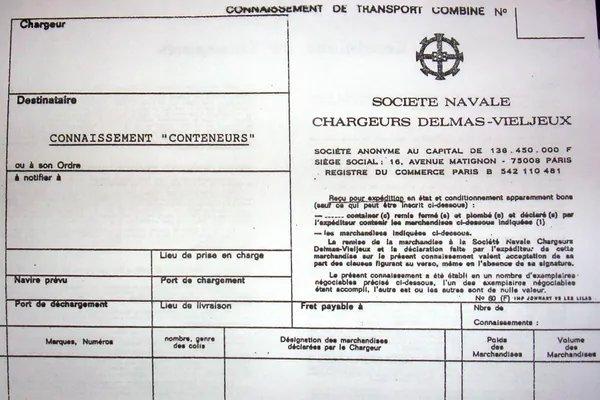
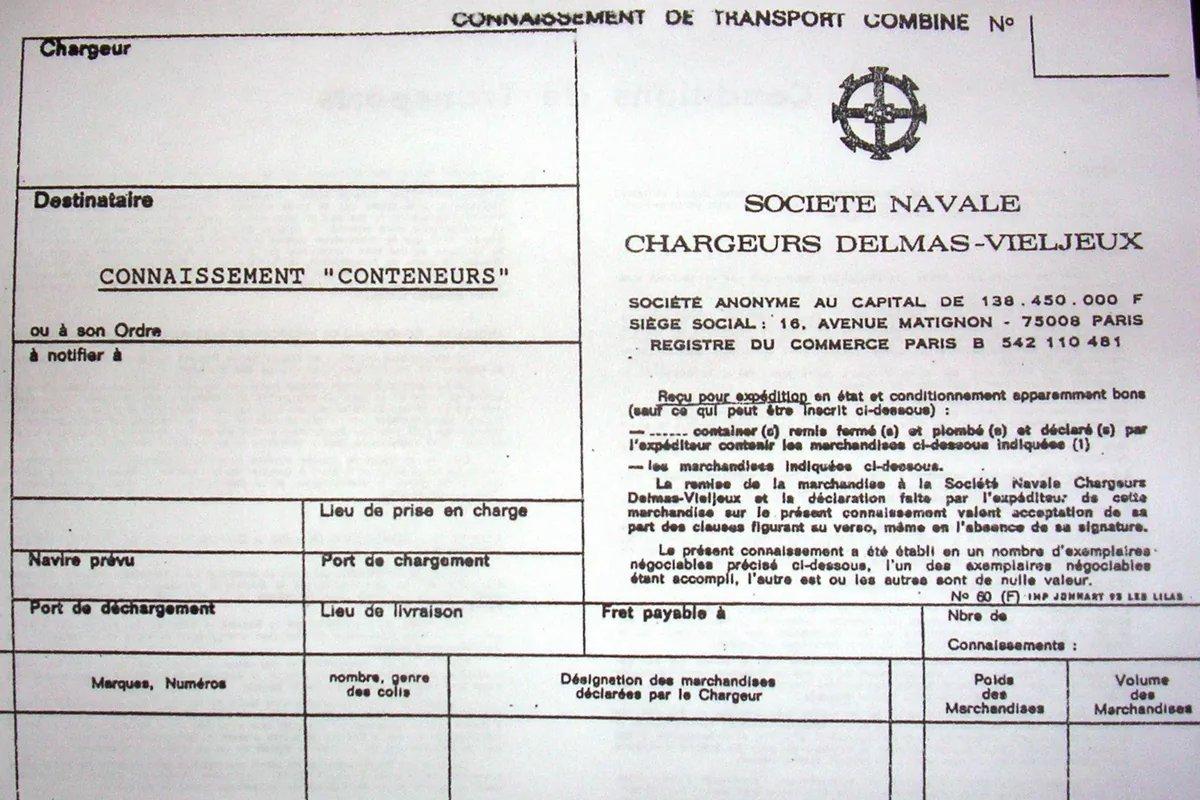

Under UCP 600 Article 4(a), a credit by its nature is a separate transaction from the sale or other contract on which it may be based. Banks are in no way concerned with or bound by such contracts, even if any reference whatsoever to them is included in the credit. Furthermore, Article 5 establishes the bedrock doctrine: 'Banks deal with documents and not with goods, services or performance to which the documents may relate.'
This principle cuts both ways:
- The Seller's Advantage: If the seller presents a set of documents that strictly complies on its face with all terms of the L/C, the issuing bank has an absolute, independent primary obligation to pay. The bank cannot refuse payment because the buyer claims the physical goods are defective, late, or non-conforming (absent established civil fraud under the narrow Sztejn doctrine).
- The Seller's Vulnerability: Conversely, if the presented documents contain even a trivial technical defect, the issuing bank has zero legal obligation to pay. The bank is strictly prohibited from considering that the physical goods delivered are 100% flawless, that the factory met every technical specification, or that the buyer actually accepted the equipment in private correspondence.
Because banks review only pieces of paper, an applicant who wishes to default or renegotiate does not attack the manufacturing quality; they attack the document presentation. If the credit was drafted with built-in traps, finding an incurable discrepancy is effortless.
2. The anatomy of 5 lethal soft clauses in SWIFT MT700
A Soft Clause (also termed a 'non-operative clause' or 'trap clause') is any condition in a letter of credit that makes the operation, validity, or drawing under the credit contingent upon an event, document, or signature under the unilateral control of the buyer (applicant). The moment a soft clause is accepted, the letter of credit ceases to be an independent payment guarantee and degenerates into an open account or deferred collection.
Five lethal soft clauses appear routinely in international trade contracts and SWIFT MT700 issuances:
- Lethal Clause 1: The Applicant-Signed Inspection Certificate Trap: Sample Wording (Field 46A / 47A): 'Original Inspection Certificate signed by Mr. John Doe, authorized representative of the applicant, confirming cargo conformity, whose signature must be verified by the issuing bank against specimen signature held in their files.' The Mechanism: This is the most destructive soft clause in global trade. If market prices collapse or the buyer suffers liquidity issues, the buyer simply refuses to send an inspector, instructs their representative to withhold their signature, or signs with a deliberate deviation from the specimen signature. Because the document cannot be created without the buyer's affirmative action, the seller cannot execute a complying presentation. The L/C becomes a discretionary checkbook in the buyer's pocket.
- Lethal Clause 2: The Vessel Nomination / Pre-Approval Ambush: Sample Wording (Field 47A): 'Shipment must be effected only on an ocean vessel approved in writing by the applicant. A copy of the applicant's Vessel Nomination & Approval Certificate must accompany the transport documents.' The Mechanism: Under FOB or CFR terms, the seller books cargo space with a reputable carrier. The seller submits vessel details to the buyer for formal approval. The buyer delays communication, claims the vessel's age, flag, or carrier rating is unacceptable, or remains silent until after the latest shipment date (Field 44C) has expired. Once the latest shipment date lapses, any subsequent bill of lading with a later on-board date constitutes a late shipment discrepancy (Field 44C / UCP 600 Article 14(a)), distinct from a late presentation discrepancy under Field 48 / Article 14(c), completely voiding bank liability.
- Lethal Clause 3: The Suffocating Document Presentation Window: Sample Wording (Field 48): 'Documents must be presented within 5 calendar days after the date of shipment.' The Mechanism: Under UCP 600 Article 14(c), if no presentation period is stated, the default statutory period is 21 calendar days after the date of shipment (but not later than the expiry date of the credit in Field 31D). Rogue applicants deliberately override Article 14(c) by inserting a 5-day or 7-day presentation window in Field 48 (SWIFT format 3n[/35x]). In modern container shipping, ocean carriers frequently take 4 to 8 working days following vessel departure to process manifest data and release original physical bills of lading. By the time the seller collects the bills of lading from the carrier and dispatches them to their nominated bank, the 5-day window has expired, guaranteeing an incurable late presentation rejection.
- Lethal Clause 4: The Ambiguous Non-Documentary Condition: Sample Wording (Field 47A): 'The manufacturing facility must maintain a zero-carbon emission rating and all shipping containers must be steam-sterilized prior to stuffing.' The Mechanism: Notice what is missing: the clause fails to state what document must be presented to evidence compliance, nor who must issue it. Under UCP 600 Article 14(h), 'If a credit contains a condition without stating the document to be presented to evidence compliance with the condition, banks will deem such condition as not stated and will disregard it.' However, in practice, issuing banks in developing or politically influenced jurisdictions frequently ignore Article 14(h) and use non-documentary conditions to issue discrepancy notices. Even if the negotiating bank argues Article 14(h), the dispute freezes funds while cargo accumulates demurrage.
- Lethal Clause 5: The Freight Forwarder B/L & Multimodal Transport Exclusion: Sample Wording (Field 46A / 47A): 'Full set 3/3 original clean on-board marine ocean bills of lading, marked freight prepaid, consigned to order of issuing bank. Freight forwarder bills of lading (House B/Ls) and multimodal transport documents are strictly unacceptable.' The Mechanism: Under Incoterms 2020 FOB terms, the overseas buyer nominates the freight forwarder. The nominated freight forwarder issues an NVOCC House Bill of Lading (HBL) to the factory, while the underlying ocean carrier (e.g., Maersk or MSC) issues the Master Bill of Lading (MBL) directly to the forwarder's destination agent. Under UCP 600 Article 14(l), a transport document issued by a freight forwarder is legally acceptable if it satisfies the signing, agency, and carriage requirements of Articles 19 through 24. However, when the credit contains an express negative stipulation in Field 46A or 47A barring forwarder documents or restricting transport strictly to Article 20 port-to-port bills of lading, presenting an HBL or an Article 19 multimodal transport document constitutes an immediate, valid discrepancy.
3. The discrepancy extortion playbook: why buyers strike at the port
Discrepancy extortion is rarely about administrative perfectionism; it is almost always driven by underlying market volatility, currency depreciation, or financial distress. The timing of the attack follows a calculated economic formula:
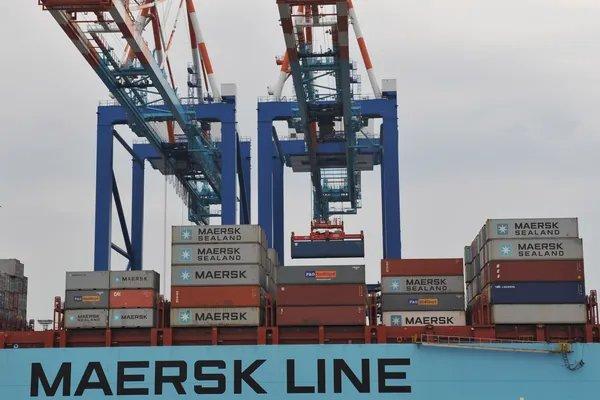
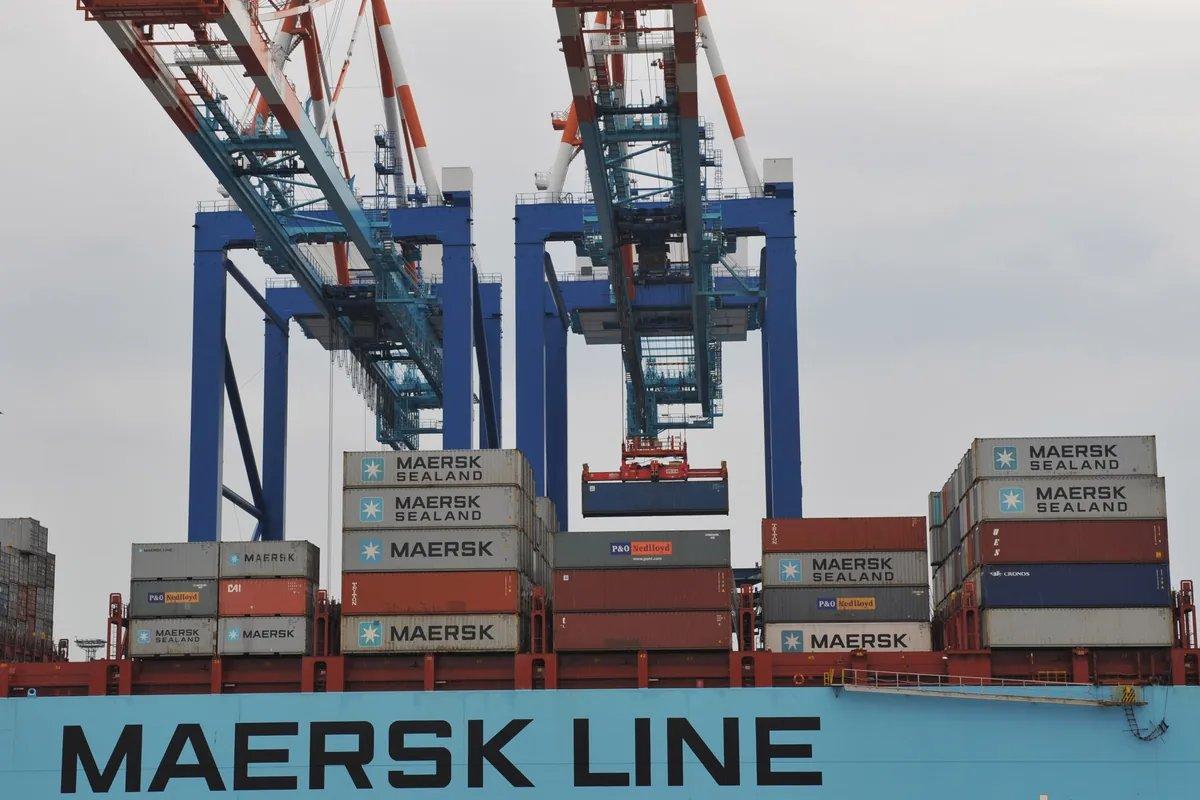

Consider the balance of leverage across the shipping timeline:
- Before Vessel Departure: The seller holds physical custody of the cargo at their warehouse or port of loading. If the buyer requests an unreasonable contract amendment or fails to provide an operative L/C, the seller can halt dispatch and resell the goods locally or to another international buyer with minimal loss.
- During Ocean Transit: The cargo is at sea. The bills of lading are dispatched into international banking channels via courier. If documents were presented promptly, the issuing bank examines them within 5 banking days while the vessel is en route. If the bank issues an MT734 notice of refusal, the seller cannot easily redirect the vessel or access the physical freight while documents remain tied up.
- Upon Discharge at Destination Port: The ocean carrier discharges the containers into the destination container terminal. Free time for demurrage (terminal storage) and detention (equipment usage outside the terminal) typically ranges from 7 to 14 calendar days. Once free time expires, daily demurrage penalties escalate rapidly ($200 to $500 per container per day).
When cargo arrives and free time burns away while the MT734 refusal stands unresolved, the seller is trapped across three fronts:
- Physical Loss via Demurrage: For a 5-container shipment, 30 days of port storage and container detention will consume $45,000 to $65,000 in cash—often exceeding the entire profit margin of the order.
- Customs Seizure and Abandonment: Under the customs regulations of many destination countries (e.g., India, Brazil, Egypt, Turkey), cargo that remains uncleared for 30 to 60 days is declared abandoned and slated for public customs auction. Worse, in jurisdictions like India, customs regulations prevent the seller from re-exporting the goods without a formal 'No Objection Certificate' (NOC) issued by the original importer!
- Banking Impasse: Because the issuing bank rejected the documents, the negotiating bank will not advance funds or will immediately reverse any provisional credit extended to the seller.
The rogue buyer knows this financial pressure point with mathematical certainty. Facing a 22% drop in destination market prices, the buyer exploits technical discrepancies to shift the commercial loss onto the seller, demanding a 20% to 35% discount as the 'price' for authorizing the issuing bank to waive discrepancies.
4. The legal counterstrike: UCP 600 Article 16 preclusion rule
When confronted with an issuing bank's notice of discrepancy, many suppliers panic and immediately concede to the buyer's discount demands. This is a fatal strategic mistake. International banking practice is strictly governed by procedural law. If an issuing bank commits even a minor procedural error in issuing its rejection notice, the bank is legally precluded from refusing payment under UCP 600.



The seller's ultimate legal shield is UCP 600 Article 16, which establishes strict rules for document refusal:
- The 5 Banking Days Limit (Article 14(b) & 16(d)): The issuing bank, nominated bank acting on its behalf, or confirming bank has a maximum of five banking days following the day of presentation to determine whether the presentation is complying. Unlike earlier revisions (such as UCP 500, which referenced a 'reasonable time'), UCP 600 Article 14(b) establishes a strict statutory ceiling: the bank has up to five banking days, and notice of refusal must be transmitted no later than the close of the fifth banking day.
- The Single, Comprehensive Notice (Article 16(c) & 16(d)): When an issuing bank decides to refuse to honor or negotiate, it must give a single notice to that effect to the presenter. The notice must be given by telecommunication (SWIFT MT734) or, if telecommunication is impossible, by another expeditious method (Article 16(d)), no later than the close of the fifth banking day. The notice must state: (1) that the bank is refusing to honor or negotiate, (2) each discrepancy in respect of which the bank refuses to honor or negotiate, and (3) the exact document disposition status under Article 16(c)(iii) (e.g., that the bank is holding documents pending further instructions from the presenter, or returning documents, or holding documents until it receives a waiver from the applicant and agrees to accept it). Under Article 16(c)(iii)(b), an applicant waiver is subject to the issuing bank's agreement, and seeking an applicant waiver does not extend the 5 banking days examination period.
- The Prohibition on 'Piecemeal' Discrepancies: The bank cannot issue an initial rejection listing two discrepancies, and then two days later issue a secondary message listing three additional discrepancies. Any discrepancy not included in the original notice is precluded forever.
- The Absolute Preclusion Penalty (Article 16(f)): This is the foundational statutory sanction in trade finance: 'If an issuing bank or a confirming bank fails to act in accordance with the provisions of this article, it shall be precluded from claiming that the documents do not constitute a complying presentation.'
What does Article 16(f) mean in practice? It means that if an issuing bank sends its refusal notice after the fifth banking day, fails to specify document disposition under Article 16(c)(iii), or sends notice by regular non-expeditious mail when telecommunication was available, the bank is legally precluded from asserting documentary discrepancies. As a matter of law, the presentation is deemed complying. Preclusion does not create an instantaneous cash wire transfer outside the credit terms, but it compels the bank to honor or negotiate in strict accordance with the credit's payment structure (sight payment, deferred payment undertaking, or draft acceptance per Articles 2, 7, and 8) and applicable governing law, stripping the bank and applicant of their discrepancy defense.
Furthermore, the ICC International Standard Banking Practice (ISBP 821) (ICC Publication No. 821, 2023 edition) and UCP 600 Article 14(d) establish common-sense examination rules that defeat bad-faith technical rejections:
- Data Need Not Be Identical (UCP 600 Article 14(d)): Data in a document, when read in context with the credit, the document itself, and international standard banking practice, need not be identical to, but must not conflict with, data in that document, any other stipulated document, or the credit.
- Harmless Misspellings and Non-Conflicting Data (ISBP 821 Paragraph A23 & UCP 600 Article 14(d)): Under ISBP 821 Paragraph A23, a misspelling or typing error that does not affect the meaning of a word or sentence does not make a document non-compliant (e.g., 'mashine' instead of 'machine'). Under UCP 600 Article 14(d), data need not be identical, meaning the presence or absence of harmless punctuation marks, hyphens, or commas does not create a discrepancy so long as the commercial identity and terms do not conflict.
- Language Consistency (ISBP 821 Paragraph A21): Documents must be issued in the language required by the credit, but standard international trade terminology, codes, or carrier references do not create non-compliance.
- Mathematical Calculations & Stated Totals (ISBP 821 Paragraph A22): A document need not show the mathematical calculation leading to a stated result. However, if mathematical calculations or stated totals in a document conflict with the credit or with another presented document, that conflict constitutes a valid discrepancy.
5. SWIFT MT700 L/C audit checklist: critical fields to sanitize before manufacturing
The only reliable way to eliminate discrepancy risk is to sanitize the SWIFT MT700 instruction the moment it is advised, before raw materials are cut or cargo is booked. When the advising bank transmits the credit copy, the procurement and sales engineering team must audit these key fields according to standard SWIFT MT700 interbank messaging specifications:
| SWIFT MT700 Field | Field Name & Function | Dangerous Soft Clause / Red Flag | Required Neutralization / Safe Standard |
|---|---|---|---|
| Field 40A & 40E | Form of Documentary Credit & Applicable Rules | Credit marked as 'IRREVOCABLE TRANSFERABLE' without prior agreement, or Field 40E silent / failing to specify UCP LATEST VERSION. | Field 40A must state 'IRREVOCABLE'. Field 40E must state 'UCP LATEST VERSION' (subject to ICC UCP 600). Never accept revocable or uncodified credits. |
| Field 41a | Available With... By... (Payment, Acceptance, Negotiation, Def Payment) | Restricted exclusively to issuing bank counters by payment in buyer's country, preventing domestic negotiation or discounting. | Must state available with advising/nominated bank 'BY NEGOTIATION' or 'BY PAYMENT' at seller's counters. Distinguish: BY PAYMENT (sight payment without drafts), BY ACCEPTANCE (usance drafts), BY NEGOTIATION (nominated bank advances funds), BY DEF PAYMENT (deferred undertaking without drafts). |
| Field 42C / 42a & 42P | Drafts at... / Drawee vs Deferred Payment | Demanding financial drafts for deferred payment credits, or usance drafts where applicant shifts discount/acceptance interest onto seller. | Specify 'AT SIGHT' under 42C with Drawee under 42a. If deferred payment, use Field 42P without financial drafts (Field 42M applies only to mixed payment structures). Ensure all financing and acceptance fees outside seller's country are for applicant's account. |
| Field 31D | Date and Place of Expiry | Expiry location set in buyer's country (forcing seller to ensure presentation arrives overseas before expiry date). | Expiry place must be in seller's country at the counters of the nominated bank, with expiry date extending at least 21 days past latest shipment date. |
| Field 44C / 44D | Latest Date of Shipment (44C) or Shipment Period (44D) | Latest shipment date set too close to production lead time (<14 days margin) or conflicting shipment schedules under 44D. | Maintain at least 15 days manufacturing buffer. Field 44C specifies fixed latest on-board date; Field 44D specifies narrative period (e.g., 'DURING JUNE 2026'). Never conflate shipment date with credit expiry. |
| Field 46A | Documents Required | Inspection certificate signed by applicant/buyer, or requiring consular legalizations impossible within presentation window. | Replace buyer signature with accredited third-party surveyor (SGS, BV, Intertek, TÜV). Require only commercial chamber attestations. |
| Field 47A | Additional Conditions | Vessel nomination approval clauses, carrier age <15 yrs certificate issued by shipping line, or non-documentary statements. | Delete all buyer pre-approval requirements. Standardize carrier and vessel requirements to standard Institute Classification Clause criteria rather than arbitrary buyer pre-approval certificates. |
| Field 48 | Period for Presentation (Syntax: 3n[/35x]) | Presentation period compressed to <10 days (e.g., '5' or '7/AFTER SHIPMENT DATE'), creating unavoidable late presentation. | Must state '21' or '21/AFTER SHIPMENT DATE BUT WITHIN CREDIT EXPIRY'. Minimum acceptable window is 15 calendar days. |
| Field 49 & 58a | Confirmation Instructions & Requested Confirming Bank | Credit states 'WITHOUT' confirmation for issuing banks in high-risk jurisdictions, or confusing confirmation request with added confirmation. | Specify 'CONFIRM' with a top-tier international confirming bank named in Field 58a. Verify that the confirming bank has actually added its independent payment undertaking, not merely advised the credit. |
6. The pre-shipment inspection (PSI) vs L/C alignment matrix
Both buyers and sellers have legitimate interests regarding quality inspection. The buyer wants absolute certainty that the machinery, steel, or components loaded into the container conform to technical drawings. The seller wants absolute certainty that once the goods pass inspection, the buyer cannot withhold payment. The solution is not to eliminate inspection, but to decouple inspection certification from the buyer's personal signature.
The table below establishes how to draft Field 46A inspection terms that provide robust engineering verification while preventing soft-clause hostage situations:
| Inspection Governance Item | Rogue Soft Clause (High Extortion Risk) | Balanced Engineering Standard (Secure & Auditable) |
|---|---|---|
| Inspecting Entity | 'Inspection Certificate signed by the buyer's authorized representative.' | 'Inspection Certificate issued by an internationally accredited independent inspection agency (SGS, Bureau Veritas, Intertek, or TÜV Rheinland).' |
| Inspection Scope & Criteria | 'Confirming goods are 100% satisfactory in all respects to the buyer.' | 'Certifying visual, dimensional, and packaging inspection performed in accordance with mutually agreed Inspection & Test Plan (ITP) No. [XYZ] dated [Date].' |
| Inspection Timing & Location | 'Inspection to be performed after arrival at port of discharge prior to customs clearance.' | 'Inspection to be performed at manufacturer's factory premises prior to packing and container stuffing (Pre-Shipment Inspection / PSI).' |
| Certificate Issuance Protocol | 'Original certificate must be countersigned by applicant and authenticated by issuing bank.' | 'Original certificate signed by the designated independent inspection agency alone. Copy transmitted directly to applicant for information only.' |
| Inspector Default Provision | Silent. (If inspector fails to appear, seller is paralyzed and shipment misses expiry date). | 'If inspector fails to attend within 5 working days of seller's written notice, manufacturer's own factory quality release certificate shall be fully acceptable in lieu thereof.' |
7. Bilingual contract templates: L/C terms & SWIFT rejection rebuttal
To protect cross-border transactions, legal safeguards must be embedded in the underlying Sales Contract / Pro-Forma Invoice before the buyer applies for the L/C, coupled with a formal statutory rebuttal template should an issuing bank issue an unjustified rejection.
Contract Clause 1: Prohibition of soft clauses and strict L/C terms (中英双语信用证开立与软条款禁止条款)
- English Standard Text: 'Payment shall be made by an irrevocable, confirmed Letter of Credit (L/C) at sight, opened by a first-class international bank acceptable to the Seller, subject to the Uniform Customs and Practice for Documentary Credits (2007 Revision, ICC Publication No. 600). The Buyer shall ensure that the draft L/C application is submitted to the Seller for written approval at least ten (10) calendar days prior to formal issuance. The L/C shall contain no soft clauses, non-operative conditions, or requirements for documents under the unilateral control of the Buyer (including, but not limited to, buyer-signed inspection certificates, buyer-approved vessel nomination certificates, or pre-conditions requiring applicant countersignatures). Any L/C issued with such conditions shall be considered non-operative, and the Seller shall be entitled to suspend manufacturing and shipment without liability until an operative amendment is received. All banking charges, amendment fees, and confirmation costs outside the Seller's country shall be for the Buyer's account.'
- 中文对等法定条款: '货款应通过由卖方认可的一流国际商业银行开立的不可撤销、保兑的即期信用证(L/C)进行结算,并受国际商会《跟单信用证统一惯例》(ICC UCP 600)管辖。买方应在正式开证前至少十(10)个日历日将信用证开证草案提交卖方进行书面确认。信用证不得包含任何软条款、非实质性生效条件或由买方单方面控制出具的单据要求(包括但不限于:买方或其代表签署的商检证书、买方书面确认的租船定舱通知、或附带买方副签要求的单据)。凡开立含有上述软条款的信用证,均被视为非实质生效信用证,卖方有权在收到合规修改通知前中止生产与发运,且不承担任何迟延违约责任。卖方所在国家/地区境外发生的所有银行费用、信用证修改费及保兑手续费均由买方全额承担。'
Contract Clause 2: Discrepancy waiver and market price defense clause (中英双语不符点免责与禁止压价条款)
- English Standard Text: 'The parties agree that minor typographical, punctuation, or clerical variations that do not affect the commercial description, quantity, or value of the goods (as defined under ISBP 821 Paragraphs A21-A23 and UCP 600 Article 14(d)) shall not constitute valid discrepancies under the L/C. In the event the issuing bank identifies technical discrepancies, the Buyer irrevocably undertakes to instruct the issuing bank to accept the documents and waive such discrepancies within three (3) banking days of notification. The Buyer expressly covenants that it shall not use technical discrepancies or issuing bank notices of refusal as leverage to request price reductions, discount amendments, or payment deferrals. In the event of unjustified refusal to waive minor discrepancies, the Buyer shall be liable for all port demurrage, container detention, warehousing, and legal fees incurred thereby, and shall pay interest on the outstanding invoice balance at the rate of 1.5% per month until full payment is realized.'
- 中文对等法定条款: '双方一致同意,不影响货物商业描述、数量或货值的微小排版、标点或文书差错(依据国际商会 ISBP 821 第 A21-A23 条及 UCP 600 第 14(d) 条规定),均不得构成信用证项下的有效不符点。若开证行提出技术性不符点,买方不可撤销地承诺在收到通知后三(3)个银行工作日内向开证行下达接受单据并放弃不符点的有效指示。买方明确承诺,绝不利用单据技术性不符点或开证行拒付通知作为要求降价、修改金额或拖延付款的谈判手段。若买方无理拒绝指示放弃微小不符点,买方应全额承担由此产生的目的港滞期费、集装箱超期使用费、仓储费及法律追偿费用,并就未付货款按每月 1.5% 的利率计付利息,直至款项全部结清。'
Formal Legal Notice: Rebuttal of SWIFT MT734 Notice of Refusal under UCP 600 Article 16 (开证行恶意拒付法定反驳函模板)
Formal Rebuttal Template (Presented via Authenticated SWIFT MT799/MT999 or Legal Counsel):
- Addressee & Reference: TO: [Name of Issuing Bank] | BRANCH / SWIFT BIC: [Issuing Bank SWIFT] | DATE: [Date] | RE: UCP 600 ARTICLE 16 REBUTTAL - L/C NO: [L/C Number] / OUR REF: [Presenter Ref Number]
- Ground 1 — Failure to State Document Disposition (Articles 16(c)(iii) & 16(f)): Your Notice of Refusal failed to explicitly state the disposition of the documents in accordance with Article 16(c)(iii)(a), (b), (c), or (d). Under UCP 600 Articles 16(c)(iii) and 16(f), a notice of refusal that fails to state an exact document disposition is procedurally defective, precluding your bank from claiming that the documents do not constitute a complying presentation.
- Ground 2 — Late Notice & Statutory Preclusion (Articles 14(b), 16(d) & 16(f)): Documents were received at your counters on [Date of Receipt]. Your Notice of Refusal was transmitted on [Date of MT734], exceeding the maximum five (5) banking days examination limit prescribed under UCP 600 Article 14(b). Furthermore, if telecommunication was available, notice by non-expeditious means violates Article 16(d). Consequently, pursuant to UCP 600 Article 16(f), your bank is irrevocably precluded from claiming that the documents do not constitute a complying presentation.
- Ground 3 — Invalid Discrepancies under ISBP 821 & UCP 600 Article 14(d): The alleged discrepancies regarding punctuation and clerical variation in the invoice description directly contravene ICC ISBP 821 Paragraphs A21–A23 and UCP 600 Article 14(d), which establish that data need not be identical and that minor clerical variations not altering commercial meaning do not constitute discrepancies.
- Demand for Honor: In light of the statutory preclusion under UCP 600 Article 16(f), the presentation is deemed complying as a matter of law. We accordingly call upon your bank to immediately discharge its independent undertaking to honor the presentation (or negotiate in strict conformity with Field 41a / 42 of the credit) without further delay. Failing immediate confirmation of honor, we shall instruct international legal counsel to pursue all available legal remedies and report this procedural breach to the ICC Banking Commission and competent banking supervisory authorities.
8. Concluding editorial insight: documentary discipline as strategic defense
In international procurement, trust is maintained through contract structure, not through verbal goodwill. When international markets are stable and profits are ample, buyers overlook imperfect documents and pay without hesitation. But the true test of a procurement contract occurs during economic downturns, sudden tariff increases, and commodity crashes.
A Letter of Credit is not an insurance policy against an unreliable trading partner; it is a precision financial instrument. By sanitizing SWIFT MT700 instructions at intake, eliminating applicant-controlled soft clauses, enforcing independent third-party engineering inspection protocols, and mastering the procedural shield of UCP 600 Article 16, industrial buyers and suppliers transform the Letter of Credit from a vulnerable trap into what it was always intended to be: an unassailable guarantee of performance and payment.
Reading notes
Standards and Authoritative Sources
Statutory rules, documentary credit conventions, and international banking practices cited in this guide:
International Chamber of Commerce (ICC)
Articles 4, 5, 14, 15, 16, 19, and 20 governing credit independence, examination standards, refusal notices, preclusion, multimodal transport, and bills of lading.
International Chamber of Commerce Banking Commission
ICC Publication No. 821 (2023 revision superseding ISBP 745); paragraphs A1-A42 governing language, mathematical calculations, harmless misspellings, punctuation, and standard document examination rules.
International Chamber of Commerce
FOB, CFR, and CIF freight and delivery risk demarcations influencing bill of lading consignment and transport document execution.
International Trade Administration, U.S. Department of Commerce
Exporter guide covering documentary letters of credit, commercial payment risks, document examination, and trade finance methods.
United Nations Commission on International Trade Law (UNCITRAL)
Articles 30, 34, and 53 governing seller's obligation to deliver documents and goods, and buyer's obligation to take delivery and pay price.
Continue the decision
Related buyer guides
Advance Payment Guarantees & URDG 758 Buyer Guide
How to structure demand guarantees, performance bonds, and deposit protection under ICC URDG 758.
The $300 CIF Quote Invoiced $4,200 at Port: The CISF Fee Trap & Cargo Insurance
Exposing destination port fee extortion, freight forwarder kickbacks, and ICC (C) cargo insurance blindspots.
The Western NDA That Protected Nothing: Enforceable Chinese NNN Agreements
Tooling bailment agreements, non-use, non-circumvention, and pre-litigation asset preservation in industrial sourcing.
The Cross-Border Procurement Field Guide
Full-spectrum supply chain risk management from supplier due diligence to port release.