Contracts & Sourcing
The Western NDA That Protected Nothing: Why Overseas Buyers Lose Their Tooling, Tech, and Markets—and How to Draft an Enforceable Chinese-English NNN Agreement
A definitive legal and operational guide for overseas procurement managers and hardware builders sourcing custom machinery, injection molds, electronic enclosures, and proprietary components: why Western NDAs fail in Asia, how the three pillars of NNN (Non-Use, Non-Circumvention, Non-Disclosure) protect your IP, how pre-agreed liquidated damages enable 48-hour bank freezes under PRC Civil Code Article 585, how to draft a Tooling Bailment Agreement with statutory lien waivers under Article 447, and complete bilingual contract clauses ready for deployment.
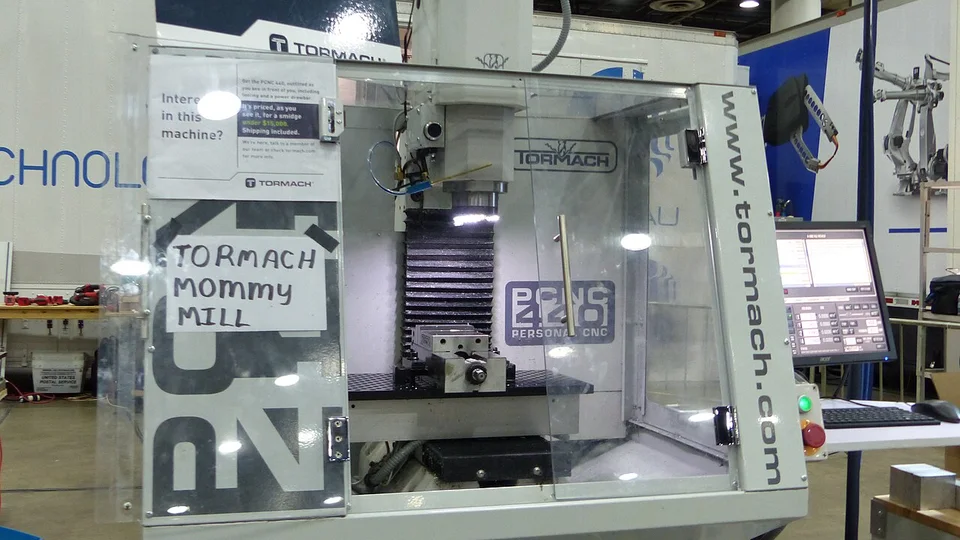

An overseas hardware startup, mid-tier equipment builder, or industrial component brand designs a custom engineered part—a precision-machined valve body, an IP67 electronics enclosure, a multi-cavity injection-molded housing, or an automated robotic subassembly. Before emailing 3D CAD STEP files and full engineering drawings to prospective factories in Shenzhen, Ningbo, Dongguan, or Changzhou for quotation, the procurement director insists on prudence: the factory must sign the company's standard Two-Page Non-Disclosure Agreement (NDA), drafted by corporate counsel in California, Delaware, or London.
The sales manager in China signs, stamps the document with a red company chop, and returns the scan within four hours. The buyer feels protected. Three months later, the mold is fabricated, first-article samples are approved, and purchase orders are placed.
Eighteen months later, disaster strikes across three fronts: the buyer discovers their exact product listed on Alibaba, AliExpress, and Amazon at a 45% discount, sold by an unfamiliar trading firm whose registered address matches the factory’s warehouse; when the buyer attempts to switch suppliers due to declining quality, the factory manager refuses to release the injection molds, claiming the tooling belongs to the factory and asserting a statutory retaining lien for alleged storage fees; and when the buyer threatens litigation under the Delaware-law NDA, legal counsel delivers the coup de grâce: judgments issued by U.S. or UK courts cannot be directly enforced in Mainland China without a bilateral recognition treaty, the NDA only prohibited disclosing information to third parties (not using it internally or selling to the buyer's customers), and proving unliquidated 'actual economic damages' in an overseas court is commercially impossible.
Why Western NDAs fail completely in Asian manufacturing
Understanding why a standard Western NDA collapses in overseas sourcing requires examining the divergence between Western legal assumptions and the operational reality of international manufacturing hubs.
- The 'Non-Disclosure' Semantic Blindspot: In Western legal practice, the word 'confidentiality' is understood to encompass protection against competitive theft. However, under strict legal interpretation, a Non-Disclosure Agreement only forbids the recipient from disclosing proprietary information to third parties or the public. A Chinese factory that receives your CAD drawings under a standard NDA rarely leaks the drawings onto the internet or sells blueprints to a competitor. Instead, the factory does something far more lucrative: it uses your drawings, tooling geometries, and tolerances internally to manufacture identical products on its own assembly lines, and circumvents you entirely by contacting your end-customers with a 40% discount. Under a narrow Western NDA, the factory has committed no breach of non-disclosure. They did not disclose your files to anyone; they simply used them.
- The Judicial Enforcement Void: Most Western corporate NDAs stipulate governing law in the buyer’s home jurisdiction (such as Delaware, New York, or English law). To an Asian factory owner with no assets, bank accounts, or real estate in North America or Europe, a foreign court judgment is little more than expensive scrap paper. Mainland China and the United States have no bilateral treaty for the reciprocal recognition and enforcement of civil court judgments. While China's Supreme People's Court issued judicial conference minutes in 2022 easing reciprocity requirements for foreign monetary judgments, non-monetary relief—such as trade secret injunctions, orders for specific performance, and asset seizure orders—remains virtually impossible to enforce against domestic entities.
- The Trap of Unliquidated 'Actual Damages': Under Anglo-American contract law, liquidated damages clauses are frequently scrutinized or struck down if deemed 'punitive penalties.' As a result, Western NDAs typically provide that the non-breaching party may recover 'actual damages and injunctive relief.' In Chinese civil litigation, proving 'actual economic loss' (实际损失) or 'the infringer's illicit profits' (违法所得) from trade secret theft is an extraordinarily heavy evidentiary burden. The plaintiff must produce auditable forensic accounting showing exact sales volumes, profit margins, and direct causal links. In fast-moving manufacturing, gathering this evidence from a privately held offshore entity is nearly impossible, resulting in token damage awards that do not even cover legal filing fees.
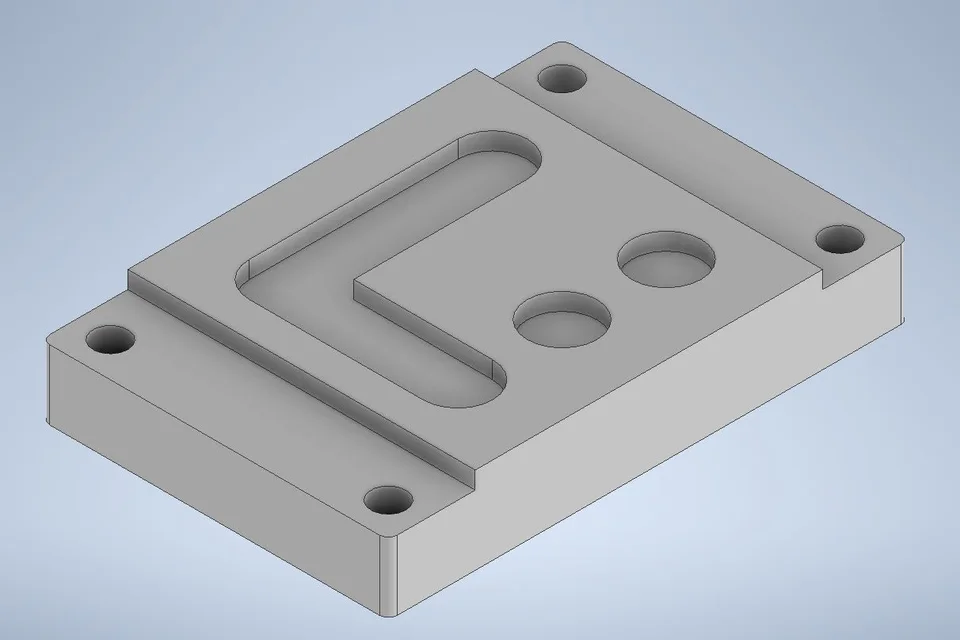

The three pillars of an enforceable NNN agreement
A true NNN Agreement replaces the single pillar of Western confidentiality with three interrelated, non-negotiable negative covenants designed specifically for international contract manufacturing: Non-Use, Non-Circumvention, and Non-Disclosure.
- Pillar 1: Non-Use (禁止使用): The Non-Use covenant establishes that the factory may use the buyer’s technical information, CAD files, material recipes, and tooling exclusively to fulfill authorized Purchase Orders issued in writing by the buyer. Crucially, the covenant explicitly prohibits: (a) production overruns ('ghost shifts'), such as running the injection molding machines or CNC line for an extra 12 hours after completing the buyer's batch of 5,000 units to produce 3,000 unbranded units for wholesale; (b) reverse engineering and cosmetic alterations (e.g., changing a bezel radius or rib thickness and claiming the resulting product is an independent, non-infringing design); and (c) component subcontracting to third parties who assemble competitive final products.
- Pillar 2: Non-Circumvention (禁止反跳 / 禁止绕开): Non-circumvention is the commercial shield that protects the buyer’s market. It recognizes that in contract manufacturing, the factory’s competitive advantage is production cost, while the buyer’s advantage is customer relationships, branding, and distribution channels. Under the Non-Circumvention clause, the supplier covenants that neither it, nor any affiliated company, parent, subsidiary, shareholder, director, employee, or agent will directly or indirectly sell, quote, or supply products incorporating or derived from the buyer’s design to any existing or prospective customer of the buyer. The supplier is barred from listing the products on any B2B or B2C platform, including Alibaba, Made-in-China, 1688.com, Taobao, Amazon, eBay, or Temu. The covenant strictly binds Related Parties (关联方), eliminating the common evasion tactic of setting up a trading firm under the name of a relative.
- Pillar 3: Non-Disclosure (禁止泄露): While Non-Use and Non-Circumvention restrict the primary supplier, Non-Disclosure restricts dissemination. In modern Asian manufacturing, tier-1 factories rarely perform every process in-house. A CNC machine shop subcontracts anodizing and laser engraving; a plastic molder subcontracts mold-base machining and silk-screening; an electronics assembler subcontracts PCB fabrication and SMT stencil cutting. The Non-Disclosure covenant limits disclosure strictly to employees with a 'need to know', requires the supplier to execute binding written back-to-back NNN agreements with any sub-tier supplier before transmitting files, and mandates immediate certifiable destruction of all digital files and physical scrap upon project termination.
The enforcement engine: Contractual liquidated damages (约定违约金)
The single most critical operational clause in a cross-border NNN Agreement is the Liquidated Damages Clause (违约金条款). While Anglo-American courts are hostile to contract clauses that appear punitive, Chinese contract jurisprudence embraces pre-agreed damages under Article 585 of the Civil Code of the People's Republic of China (《中华人民共和国民法典》第585条).
Article 585 provides that the parties may agree that when one party breaches the contract, it shall pay a certain amount of liquidated damages according to the circumstances of the breach, and may also agree on the calculation method of the resulting damages. This statutory mechanism provides three decisive tactical advantages in cross-border procurement:
- Elimination of the Loss Calculation Burden: In court, the buyer does not need to audit the factory’s private accounting books or prove lost retail sales in overseas markets. The buyer only needs to prove the objective fact of breach—for example, presenting a notary-certified purchase of the product from the supplier’s Alibaba storefront or showing unauthorized tooling operation. Once the breach is established, the contractual damages amount is triggered automatically.
- Pre-Litigation Property Preservation (诉前财产保全): Under Articles 103 and 104 of the PRC Civil Procedure Law, a claimant with a liquidated, quantifiable monetary claim can apply for emergency asset freezing before or upon filing a lawsuit. Because the NNN agreement specifies an exact figure (e.g., RMB 1,500,000), the buyer’s Chinese litigation counsel can request the court to freeze the supplier’s operational bank accounts and manufacturing equipment within 48 to 72 hours. Freezing a factory’s payroll and working capital accounts creates overwhelming commercial pressure, almost always forcing an immediate, favorable cash settlement.
- A Clear Psychological Deterrent: When a factory director sees a Western NDA mentioning 'injunctive relief and damages according to proof in Delaware,' they view the legal risk as virtually zero. When they see a bilingual contract stating: 'Breach of Section 1 or 2 shall incur liquidated damages of RMB 2,000,000, enforceable in the local Intermediate People's Court,' they understand that their local operating bank account can be frozen overnight without warning.
To ensure enforceability, the liquidated damages figure must be calibrated carefully. Under Judicial Interpretations of China's Supreme People's Court, if the agreed liquidated damages exceed 30% of the actual loss caused by the breach, the court may reduce the amount upon the defendant's request. For mid-sized industrial procurement projects (tooling and production runs valued between USD 50,000 and USD 500,000), a liquidated damages figure between RMB 1,000,000 and RMB 3,000,000 (approximately USD 140,000 to USD 420,000) is widely regarded by Chinese courts as commercially reasonable, reflecting sunk engineering R&D investments, tooling commissioning time, and market disruption.

The tooling bailment trap: How to maintain ownership of molds and dies
For buyers of injection-molded plastics, die-cast aluminum, progressive stamping, and cold-forged components, tooling represents the single largest upfront capital outlay. It is also the factory’s ultimate leverage point when commercial friction occurs.
A classic extortion unfolds when an overseas buyer attempts to move tooling to a competitive molder due to quality issues or sudden 30% unit price increases. The factory manager halts release, asserting three barriers: claiming the original agreement was a 'tooling development service' rather than a transfer of physical chattel; arguing the mold is physically integrated into the factory's specific machinery platen; and asserting a Statutory Retaining Lien (法定留置权) under Article 447 of the PRC Civil Code, claiming the buyer owes fictitious storage fees or unpaid raw material costs.
To defeat this hostage scenario, tooling must never be procured through an informal line item on a proforma invoice. It must be governed by a formal Tooling Bailment Agreement (模具确权与保管协议) executed prior to wiring the deposit, establishing four legal and physical safeguards:
- Legal Title vs. Physical Custody: The agreement must establish unequivocally that the buyer is the sole and exclusive legal and beneficial owner of the tooling, including all cores, cavities, inserts, slides, lifters, hot runner manifolds, cooling fittings, and design drawings. The supplier’s status is strictly defined as that of a temporary custodian/bailee (保管人).
- Express Statutory Waiver of Retaining Lien (放弃留置权): The agreement must contain an explicit, unequivocal waiver: 'The Supplier irrevocably waives any and all rights to retain, hold, lien, or encumber the Tooling under Article 447 of the Civil Code of the People's Republic of China or any other statutory provision, regardless of any pending dispute regarding commercial invoices, storage, or manufacturing fees.'
- Physical Asset Tagging (资产金属铭牌): The contract must require the factory to permanently rivet an engraved stainless steel identification plate onto the exterior mold base prior to final payment. The plate must state in English and Chinese: 'Property of [Buyer Company Name]. Asset ID: [SR-TL-2026-001]. Unauthorized removal, operation, or disposal is strictly prohibited and subject to civil liability and criminal prosecution under PRC law.' Final tooling milestone payment (typically 20% to 30%) must be strictly gated on photographic and video proof of the installed plate.
- Unconditional 72-Hour Release Protocol: The supplier must agree to pack the tooling for export transport (applying VCI anti-corrosion oil and wooden crating complying with ISPM 15) and release custody to the buyer’s designated logistics carrier within 72 hours of receiving written notice, without requiring prior judicial intervention. A per-day liquidated damage penalty (e.g., RMB 10,000 per day) must apply to any refusal to release.
Governing law, language, and forum selection
A well-drafted NNN agreement is useless if filed in the wrong forum or written in the wrong language. Sourcing managers must make deliberate choices across governing law, language priority, and dispute resolution venues.
| Strategy Aspect | Chinese People's Court Litigation | Commercial Arbitration (CIETAC / SCIA / HKIAC) |
|---|---|---|
| Primary Advantage | Immediate access to Pre-Litigation Property Preservation (freezing bank accounts within 48–72 hours). | Neutral tribunal, confidential proceedings, highly experienced bilingual commercial arbitrators. |
| Jurisdiction Choice | Intermediate People's Court at the Supplier's registered domicile (被告住所地中级人民法院). | CIETAC (Beijing/Shanghai), SCIA (Shenzhen), or HKIAC (Hong Kong). |
| Enforcement Speed | Local court enforces its own judgments directly through court execution officers. | Arbitral award must be taken to the local intermediate court for recognition and execution. |
| Cost Profile | Lower statutory court fees; plaintiff must advance a preservation bond or surety bond insurance. | Higher filing and tribunal fees; lower risk of local protectionism in smaller tier-3 industrial cities. |
| Recommended Sourcing Fit | Standard manufacturing, precision tooling, and custom hardware where emergency bank freezing is decisive. | High-stakes IP licensing, joint development agreements (JDA), and complex electronics firmware. |
For governing language, the agreement must be drafted in dual-column English and Simplified Chinese, with an explicit clause stating that the Chinese version shall prevail in the event of any discrepancy (以中文版本为准). If an agreement is written solely in English, Chinese courts must appoint an official translation agency before hearing the dispute. Court-appointed translations frequently mistranslate common-law legal terms—such as confusing 'indemnification' with 'compensation for tortious damage,' or rendering 'circumvention' into colloquial phrases—blunting the legal teeth of your covenants.



The 5-step pre-RFQ execution playbook
Executing an NNN agreement must follow a strict chronological sequence. Releasing technical files before the contract is fully executed destroys legal protection and creates irreversible exposure.
- Step 1: Corporate Entity Penetration: Never execute an agreement with an English trade name (e.g., 'Shenzhen Super Precision Co., Ltd.'). English trade names have no legal standing in Chinese courts. Demand the supplier’s official Business License (营业执照) and extract their official registered Chinese corporate name and 18-digit Unified Social Credit Identifier (统一社会信用代码, USCI). Verify on the National Enterprise Credit Information Publicity System (gsxt.gov.cn) that the company is active, financially solvent, and not listed on the abnormal operations registry.
- Step 2: Formal Execution with the Company Chop (公章): In China, a signature alone by a sales representative does not legally bind the corporate entity. Under Chinese corporate law, the primary symbol of corporate commitment is the official Company Chop (公章)—the round red seal registered with the local Public Security Bureau, bearing the company's full legal Chinese name. The NNN Agreement must be signed by the Legal Representative (法定代表人) or authorized signatory AND stamped with the official corporate seal or Contract Chop (合同专用章).
- Step 3: Defensive IP Registration in China: An NNN agreement is a contract between two private parties; it does not bind third parties. Because China operates on a strict First-to-File system for trademarks and patents, file your trademark in China (both English brand name and Chinese transliteration) in relevant Madrid Protocol or CTMO classes before contacting factories. If your product has unique aesthetic geometry, file a Chinese Design Patent (外观设计专利) prior to public disclosure.
- Step 4: Tooling Milestone Gating & Nameplate Audit: Never release 100% of tooling funds upon T1 plastic sample approval. Maintain a four-stage payment schedule: 40% deposit upon contract execution; 30% upon T1 physical sample inspection; 10% upon T2 textured sample approval; and 20% retention payable only after receiving high-resolution photographic and video proof of the engraved stainless steel asset identification plate permanently riveted to the mold base, alongside full 2D/3D as-built mold drawings.
- Step 5: Customs IP Recordal & Breach Monitoring: Once your trademark and design patents are granted in China, record them with the General Administration of Customs of China (GACC / 海关总署知识产权海关保护系统). Recorded IP empowers customs officers at major export ports (Yantian, Ningbo, Shanghai, Qingdao) to inspect export containers and impound unauthorized shipments bearing your brand or patented design before they depart Chinese waters.
Bilingual clause-by-clause contract template
Below are battle-tested model clauses for incorporation into an enforceable cross-border NNN and Tooling Bailment Agreement. They provide side-by-side English and Chinese text, structured for immediate commercial deployment.
Model Clause 1: Non-Use (禁止使用条款)
English: The Receiving Party covenants and agrees that it shall not, directly or indirectly, use the Disclosing Party's Confidential Information, technical drawings, CAD/STEP models, product designs, or proprietary specifications for any purpose other than manufacturing the Products specifically ordered by the Disclosing Party pursuant to written Purchase Orders issued hereunder. Without limiting the generality of the foregoing, the Receiving Party shall not: (a) produce any unauthorized overruns, surplus goods, or 'ghost shift' products; (b) manufacture, assemble, or distribute any products that copy, incorporate, or derive from the Disclosing Party's designs, whether with cosmetic modifications or otherwise; or (c) supply any components incorporating the Disclosing Party's proprietary geometry to any third party.
中文: 接收方承诺并同意,其不得直接或间接将披露方的保密信息、技术图纸、CAD/STEP三维模型、产品设计或专有技术规范用于除依据披露方书面采购订单为披露方生产指定产品之外的任何目的。在不限制前述规定的普遍性的前提下,接收方不得:(a) 生产任何未经授权的超量产品、多余货物或“影子班次/幽灵工单”产品;(b) 制造、组装或分销任何复制、包含或源自披露方设计的产品(无论是否进行外观细微修改);或 (c) 向任何第三方供应包含披露方专有几何构型或特征的零部件。
Model Clause 2: Non-Circumvention (禁止反跳 / 禁止绕开条款)
English: The Receiving Party covenants that neither it, nor any of its Related Parties (including its parent company, subsidiaries, affiliates, shareholders, directors, officers, key employees, or legal representatives, or any entity owned or controlled by family members thereof), shall, directly or indirectly: (a) solicit, contact, quote, sell to, or accept orders from any customer, distributor, reseller, or retail channel of the Disclosing Party; (b) advertise, list, or sell the Products or substantially similar derivative products on any domestic or international e-commerce platform, including but not limited to Alibaba, 1688.com, Made-in-China, Taobao, Amazon, eBay, Temu, or AliExpress; or (c) circumvent the Disclosing Party by establishing direct commercial relationships with any third party introduced by the Disclosing Party.
中文: 接收方承诺,其自身及其任何关联方(包括其母公司、子公司、关联实体、股东、董事、高级管理人员、核心员工或法定代表人,或由其家庭成员拥有或控制的任何实体),均不得直接或间接:(a) 招揽、接触、报价、销售予或接受来自披露方的任何客户、分销商、转售商或零售渠道的订单;(b) 在任何国内或国际电子商务平台上(包括但不限于阿里巴巴、1688、中国制造网、淘宝、亚马逊、eBay、Temu或速卖通)宣传、刊登或销售本产品或实质上相似的衍生产品;或 (c) 通过与披露方所介绍的任何第三方建立直接商业合作关系而绕开披露方。
Model Clause 3: Prohibition on IP Squatting (禁止抢注知识产权条款)
English: The Receiving Party acknowledges and agrees that all intellectual property rights in and to the Confidential Information, drawings, tooling, designs, trademarks, and trade names belong exclusively to the Disclosing Party. The Receiving Party covenants that neither it nor any of its Related Parties shall, anywhere in the world (including within the People's Republic of China), file or cause to be filed any application for patents (including invention, utility model, and design patents), trademarks, copyrights, domain names, or other intellectual property registrations that incorporate, reflect, or derive from the Disclosing Party's Confidential Information, or that are identical or confusingly similar to the Disclosing Party's marks. Any registration obtained in violation of this Clause shall be immediately transferred to the Disclosing Party at the Receiving Party's sole expense.
中文: 接收方确认并同意,保密信息、图纸、工装模具、设计、商标及商号中的所有知识产权均完全且独家归属于披露方。接收方承诺,其自身及其任何关联方均不得在全球任何法域(包括中华人民共和国境内)申请或促使申请包含、反映或源自披露方保密信息、或与披露方的商标相同或近似的任何专利(包括发明专利、实用新型专利和外观设计专利)、商标、著作权、域名或其他知识产权登记。违反本条规定获取的任何登记或权利,均应在披露方要求下立即无偿转让予披露方,相关费用全部由接收方承担。
Model Clause 4: Agreed Liquidated Damages (约定违约金与财产保全条款)
English: The parties expressly recognize that any breach of Section 1 (Non-Use), Section 2 (Non-Circumvention), or Section 3 (Prohibition on IP Squatting) will cause irreparable commercial harm to the Disclosing Party that is difficult to quantify precisely. Accordingly, the parties agree that upon any such breach, the Receiving Party shall pay to the Disclosing Party agreed liquidated damages in the amount of RMB 1,500,000 (one million five hundred thousand Renminbi) for each discrete breach, or an amount equal to three (3) times the gross revenue derived by the Receiving Party from such breach, whichever is higher. The payment of liquidated damages shall not prejudice the Disclosing Party's right to seek immediate injunctive relief, specific performance, and pre-litigation or post-litigation property preservation (including the freezing of the Receiving Party's bank accounts and operational assets) pursuant to the Civil Procedure Law of the People's Republic of China.
中文: 双方明确确认并同意,接收方对本协议第1条(禁止使用)、第2条(禁止反跳/绕开)或第3条(禁止抢注知识产权)的任何违反,将给披露方造成难以精确量化的无法弥补的重大商业损害。因此,双方同意,一旦发生上述违约行为,接收方应就每次独立的违约行为向披露方支付约定违约金人民币 1,500,000 元(大写:壹佰伍拾万元整),或支付相当于接收方因该违约行为所获得全部营业毛收入的三(3)倍金额,以较高者为准。违约金的支付不影响披露方根据《中华人民共和国民事诉讼法》申请立即采取禁令救济、实际履行以及诉前或诉讼中财产保全(包括冻结接收方的银行账户及经营性财产)的合法权利。
Model Clause 5: Tooling Ownership & Lien Waiver (模具确权与放弃留置权条款)
English: All molds, dies, fixtures, gauges, stencils, and tooling fabricated or procured for the production of the Products (collectively, 'Tooling') shall remain the sole and exclusive personal property of the Buyer. The Supplier holds custody of the Tooling strictly as a temporary bailee. The Supplier shall permanently rivet an engraved stainless steel asset nameplate to the Tooling exterior stating: 'Property of [Buyer Name], Asset ID: [XXXX]'. The Supplier hereby irrevocably and unconditionally waives any and all rights of lien, retention, set-off, or encumbrance over the Tooling under Article 447 of the PRC Civil Code or any other law. Upon Buyer's written request, the Supplier shall pack the Tooling in compliant export crates and release custody to Buyer's nominated freight carrier within seventy-two (72) hours. Failure to release the Tooling within said period shall subject the Supplier to liquidated damages of RMB 10,000 per calendar day until full physical delivery.
中文: 为生产本协议项下产品而制造或采购的所有模具、冲模、夹具、量具、钢网及工装(统称“工装模具”),均始终为买方的单独且专属财产。供应商仅作为临时保管人(寄托人)持有该工装模具。供应商应在工装模具外部永久铆接雕刻的不锈钢资产铭牌,标明:“[买方名称]之专有财产,资产编号:[XXXX]”。供应商在此不可撤销且无条件放弃根据《中华人民共和国民法典》第447条或任何其他法律对工装模具享有的任何留置权、扣留权、抵销权或担保物权。收到买方书面通知后,供应商应在七十二(72)小时内将工装模具妥善装入符合出口标准的箱内并向买方指定的货运承运人交付。供应商未能在此期限内交付工装模具的,每逾期一日,应向买方支付违约金人民币 10,000 元,直至实际完全物理交付为止。
Model Clause 6: Governing Law and Dispute Resolution (适用法律、语言与争议管辖条款)
English: This Agreement shall be governed by and construed in accordance with the laws of the People's Republic of China. This Agreement is executed in bilingual Chinese and English versions. In the event of any conflict, discrepancy, or ambiguity between the two language versions, the Chinese version shall prevail for all legal and judicial purposes. Any dispute arising out of or in connection with this Agreement shall be submitted to the exclusive jurisdiction of the Intermediate People's Court located in the domicile or principal place of business of the Receiving Party [or alternatively: submitted to the China International Economic and Trade Arbitration Commission (CIETAC) in Beijing for arbitration].
中文: 本协议受中华人民共和国法律管辖并依其解释。本协议以中英文双语签署。两个语言版本之间如有任何冲突、不一致或歧义,在所有法律和司法程序中均以中文版本为准。由本协议引起的或与本协议有关的任何争议,应提交至接收方住所地或主要营业地有管辖权的中级人民法院专属管辖 [或者备选:提交至位于北京的中国国际经济贸易仲裁委员会(CIETAC)按照其仲裁规则进行仲裁]。
Buyer's field conclusion: Contracts that enforce themselves
In cross-border sourcing, contracts do not protect you because you intend to spend three years litigating in a foreign tribunal. Contracts protect you when they alter the supplier’s immediate cost-benefit calculus at the workshop level.
A standard Western NDA provides zero deterrence because the factory knows you cannot reach them. A bilingual NNN Agreement with Chinese governing law, intermediate court jurisdiction, explicit tooling bailment, and specific liquidated damages changes everything. When the factory director realizes that unauthorized production or refusal to return tooling triggers an immediate, notary-certified claim for RMB 1,500,000 backed by a 48-hour freeze on their operational bank accounts, the mold stays on the shelf, the CAD files remain secure, and the product is manufactured exclusively for the buyer who paid for it. Protect your technology before you send the STEP file—not when the duplicate arrives on Amazon.
Reading notes
Regulatory and Legal References
Primary legal and regulatory authorities reviewed on 22 November 2026. This guide provides practical operational and procurement intelligence, not formal legal counsel. Contractual drafting should be adapted to specific transaction facts in consultation with qualified bilingual PRC counsel.
National People's Congress (NPC)
Articles 585 (Liquidated Damages), 447 (Statutory Retaining Lien), and 509 (Performance of Contractual Obligations).
National People's Congress (NPC)
Articles 103 and 104; statutory procedures for Pre-litigation Property Preservation and freezing of commercial bank assets.
Supreme People's Court of the People's Republic of China
Fa Shi [2020] No. 7; standards of proof for confidential technical data, reverse engineering defenses, and scope of trade secret protection.
State Council of the People's Republic of China
State Council Decree No. 395; statutory powers of China Customs to inspect, detain, and impound infringing export and import cargo.
Continue the decision
Related buyer guides
The PO Names a Factory. The Invoice Names a Trader. Who Is the Seller?
Verifying seller entity chains and payee legitimacy before wiring funds.
The Supplier Sent a Bank Guarantee for Your Deposit. Will the Bank Actually Pay?
Protecting advance payments and structuring milestone security under URDG 758.
The $300 CIF Shipping Quote That Invoiced $4,200 at the Port
Uncovering LCL destination fee extortion, CISF kickbacks, and marine cargo insurance gaps.
The Cross-Border Procurement Field Guide
Managing cross-border risk across the full procurement and logistics lifecycle.