Buyer's Field Notes
The Packing List Adds Up. The Container Weight Still Doesn’t.
A correct cargo total is not automatically the verified mass of the packed container. The missing weight may sit in the packaging, securing material or container itself—and the missing responsibility at a handover.
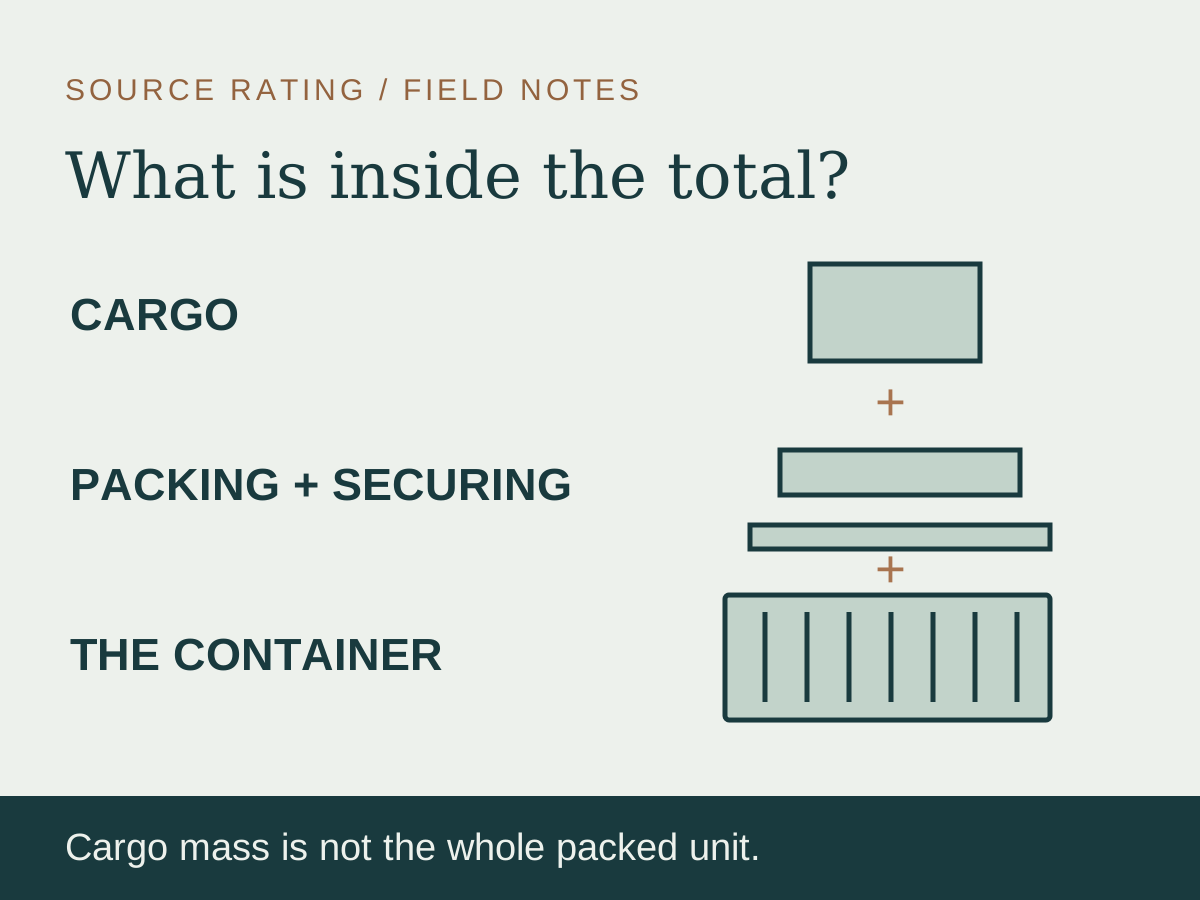
The quantities are correct. The supplier has weighed the goods. The packing list has been checked twice. Yet the number needed for the sea shipment can still be wrong, because the document may answer a different question from the one the carrier needs answered.
What is the mass of the goods? What is the gross mass of the packed cargo? What is the verified gross mass of the packed container? Before comparing figures, agree which object each figure describes.
The container is part of the number
IMO's explanation of verified gross mass describes two verification routes: weighing the packed container, or an approved certified method that combines cargo and packing-related masses with the container's tare. The latter includes pallets, dunnage and securing material. A cargo-only total does not describe that complete object.
The same guidance places responsibility on the shipper as defined by the transport documentation or carriage contract. That is not a role a buyer should assign simply by guessing that the factory, forwarder or party paying the freight must handle it. Verified mass must reach the relevant parties in time for stowage planning; it is a loading prerequisite under the applicable SOLAS rules, not an unconditional right to loading.
IMO's container-safety overview confirms that the requirement entered into force in July 2016. It is not a newly announced rule waiting to take effect. The practical task is to apply the established requirement to the actual booking and packing operation.
Find the handover where the packing changes
Map who supplies each weight in the shipment record. The manufacturer may know the goods and factory packaging. The packer may add supports. Another party may secure the load. Ask which final arrangement the verification covers, rather than assuming an earlier packing list includes every subsequent addition.
For the purchaser, a useful reconciliation connects the purchase quantities, actual packed units, container identity and final verification record. Keep the mass descriptions and units explicit. Where a discrepancy appears, establish whether someone omitted material, used a different container, or simply attached a different meaning to the word gross. Do not alter the figure merely to make two spreadsheets agree.
A late change deserves the same clarity. If additional goods or packing are introduced after the weight record was prepared, ask the responsible shipper and service provider what must be rechecked and resubmitted. The answer should follow the applicable method and booking arrangements, not an improvised allowance suggested in a general article.
Put the owner of the number in the booking file
Before loading, record who obtains the verified mass, who checks its link to the container and who submits it. Confirm the actual carrier and terminal cut-off with the parties handling the booking. A universal number of hours copied from another route is not a reliable substitute for those instructions.
Also agree the response when the record is missing or disputed. Ask the service provider what authorized weighing or correction arrangements are available and how any extra cost will be handled. A plan agreed before the truck departs is more useful than discovering at the terminal that everyone expected somebody else to provide the figure.
The procurement file does not need another decorative certificate. It needs a number tied to an identifiable packed container, obtained by the applicable method and owned by a clearly identified party. A tidy packing list remains useful—but it should not be asked to prove something it never measured.
For another packing handover, see why plywood crate walls do not describe every skid and brace.
Reading notes
Source notes
Official IMO explanations checked on 21 October 2026. This article offers purchasing and handover questions, not an approved weighing method, port-specific cut-off or legal allocation of responsibility for a particular shipment.
International Maritime Organization
Describes the shipper, verification routes and loading conditions. Confirm the applicable national method and current booking arrangements separately.
International Maritime Organization
Confirms the verified-mass requirement's entry into force and broader container-safety context. No particular carrier service is assessed.