Procurement Operations
The 50,000 m² Factory That Existed Only in the Showroom: The Overseas Buyer's Guide to Corporate Penetration Due Diligence in Chinese Industrial Sourcing
A field guide for overseas buyers procuring custom machinery, electrical equipment, precision tooling, and fabricated components: how trading intermediaries stage 'showroom factories' and shadow subcontracting, how to cross-examine GSXT corporate records and paid-in capital under the 2024 PRC Company Law, verify social security headcounts and environmental discharge permits, audit industrial power bills against machine capacity, and contractually enforce anti-outsourcing covenants.

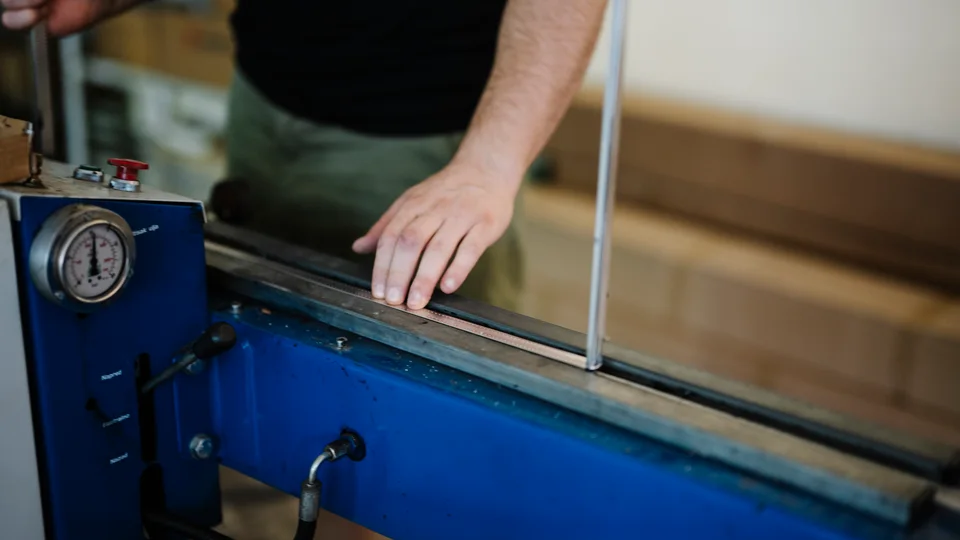

An overseas procurement manager procuring bespoke automation equipment, custom electrical switchgear, precision hydraulic manifolds, or engineered castings flies into Shanghai, Hangzhou, or Shenzhen. At the high-speed rail station, they are greeted by an attentive English-speaking sales director in a sleek executive van. Within forty minutes, they arrive at an imposing industrial park spanning 50,000 square metres. The entrance features a polished granite monument, twenty-foot company flags, and an expansive glass-walled showroom displaying five-axis CNC impellers, laser-welded valve bodies, and gold-embossed ISO 9001 and ISO 14001 certificates.
The tour proceeds down the central workshop aisle. Overhead bridge cranes traverse the ceiling, automated horizontal machining centers emit steady hums behind safety glass, and rows of workers in branded navy coveralls deburr precision parts. The technical director answers every engineering query with fluency. Over dinner, the parties finalize the proforma invoice. The buyer signs a USD 280,000 purchase order with 'Ningbo Zenith Precision Technology Co., Ltd.', wires a 30% advance deposit (USD 84,000), and returns home confident that they have secured a world-class tier-one manufacturer.
Sixteen weeks later, the shipping container is unsealed at the destination warehouse in Chicago or Rotterdam. The parts are an unmitigated disaster: hole center-to-center distances exceed drawing tolerances by 2.4 mm, surface roughness is Ra 6.3 instead of the specified Ra 0.8 ground finish, weld seams contain internal slag porosity that fails ultrasonic testing, and mill test certificates appear xeroxed with misaligned serial numbers. When the buyer hires an accredited third-party inspection (TPI) agency to conduct an unannounced audit at the Ningbo facility, the plant security guards bar the inspector at the boom gate. The factory general manager informs the inspector that Ningbo Zenith is merely an independent tenant renting an 80-square-metre sales office on the third floor of their administration building. Zenith never placed a purchase order with the facility. Zenith actually subcontracted the buyer's order to an unlicensed shadow workshop fifty kilometres away in a rural village, operated with second-hand manual lathes and scrap steel billet.
When the buyer's legal counsel files an asset search against Zenith, they uncover a fatal reality: Zenith is registered with a nominal registered capital of RMB 20 million, but its paid-in capital is RMB 0. The corporate bank account has a balance of RMB 4,200. The legal representative is a 72-year-old straw man residing in an inland province, and the real plant seen during the tour has zero privity of contract with the buyer. The buyer's USD 84,000 deposit and sixteen weeks of critical project schedule are permanently lost.
The mechanics of the 'showroom factory' and fake OEM scam (展厅工厂与假代工欺诈)
This scenario is not an isolated anecdote. Across international procurement communities (such as Reddit r/Procurement, r/SupplyChain, and cross-border trade legal forums), the 'Showroom Factory' (展厅工厂) and 'Shadow Workshop Bait-and-Switch' (假代工/偷梁换柱) rank among the most prevalent and costly traps in Asian industrial sourcing. The scam exploits the structural separation between physical asset ownership and corporate sales entities.
- The Showroom Tenancy Model: Industrial development zones across coastal China frequently feature mixed-use manufacturing campuses where modern factory buildings are partitioned among independent corporate tenants. An opportunistic trading company rents a small administrative office in the front building while negotiating an informal arrangement with the real plant owner—or bribing the floor manager—to host overseas buyers for 'client tours'. The real factory believes the trader is bringing potential new contract volume; the overseas buyer believes the trader owns the entire manufacturing complex.
- The 'Golden Sample' Diversion: To pass preliminary RFQ evaluation, the trading intermediary commissions a specialized precision prototype shop to manufacture three flawless qualification samples on imported Mazak or DMG Mori 5-axis machines. Once the buyer signs the production contract and releases the deposit, the volume production is diverted to low-tier, uncertified suburban sweatshops operating without quality management systems, environmental controls, or calibrated inspection tools.
- The Corporate Shell Armor: The intermediary registers a corporate entity whose business name mimics an established industrial group (e.g., adding 'Group', 'Heavy Industry', or 'Precision Technology' to a generic trade name). They subscribe to an inflated registered capital (认缴注册资本) under pre-2024 corporate rules, pay in zero cash equity, list a nominee relative as the legal representative, and maintain no tangible fixed assets. If a major shipment is rejected or a catastrophic failure occurs, the intermediary simply abandons the corporate shell, absorbs no personal liability, and establishes a new trading entity the following week.
- The Platform Verification Fallacy: Overseas buyers frequently place blind trust in B2B platform badges such as 'Alibaba Verified Supplier', 'Gold Supplier', or 'Made-in-China Audited Supplier'. While third-party inspection firms (such as SGS or TÜV Rheinland) physically visit the location, their statutory audit mandate only certifies that a manufacturing facility exists at that physical coordinate on the date of the visit. The platform audit does NOT legally certify that the trading entity holds proprietary ownership of the production assets, that factory workers are employed on the trader's social security payroll, or that your purchase order will be manufactured on the audited assembly line.
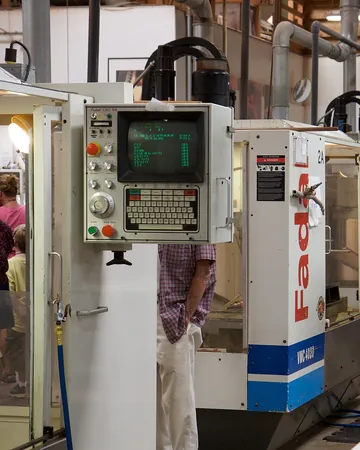
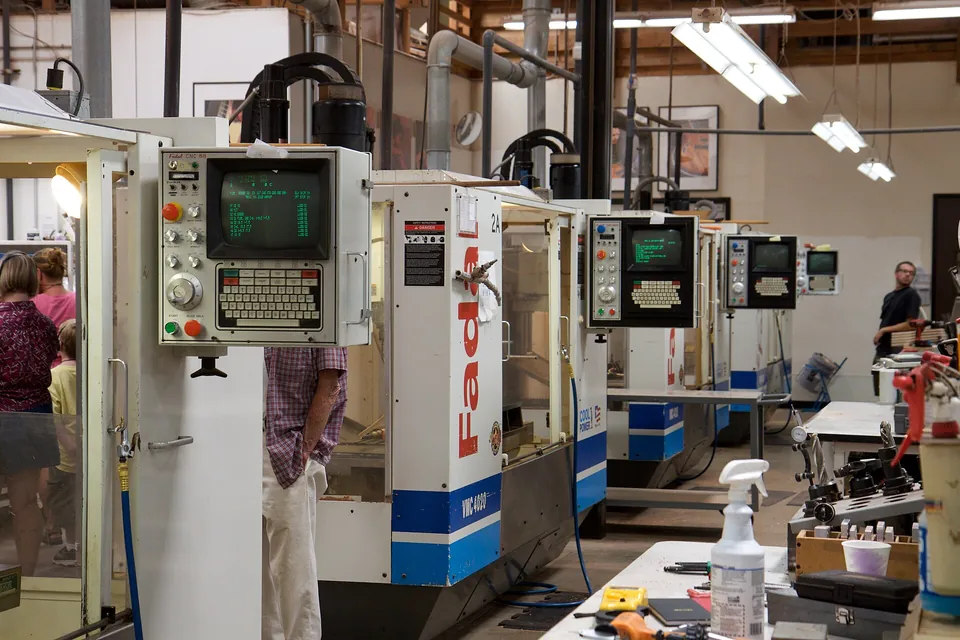

The five tiers of Chinese industrial suppliers: structural anatomy
To establish reliable procurement boundaries, an international buyer must categorize every prospective Chinese supplier into one of five structural tiers before issuing an engineering drawing package or requesting a quotation:
- Tier 1: Genuine Proprietary Manufacturers (源头实体工厂): Owns or holds long-term registered industrial land/facility leases; owns machine tools recorded as fixed assets on audited balance sheets; employs a dedicated engineering and QC workforce with active statutory social security contributions; holds an active Environmental Impact Assessment (EIA) pollutant discharge permit; and possesses direct customs export registration.
- Tier 2: Direct Equity-Holding Export Arms (集团工贸一体公司): A specialized foreign trade company directly owned by, or sharing majority beneficial ownership with, the parent manufacturing facility. Verifiable through public corporate equity penetration trees where both entities share the same Ultimate Beneficial Owner (UBO / 实际控制人).
- Tier 3: Legitimate Stockists & Value-Added Processors (实体加工贸易商): Entities that own warehousing infrastructure, maintain verified buffer stocks of raw metals or components, perform certified secondary operations (such as slitting, heat treatment, custom cutting, or kitting), and transparently disclose primary mill sources under auditable mill test certificates.
- Tier 4: Pure Paper Trading Intermediaries (无实体拼缝贸易商): Commercial brokerages with zero manufacturing equipment, minimal subscribed capital, commercial office leases, and 2 to 5 sales personnel. They secretly outsource 100% of production to external job shops while charging a 15% to 35% margin. They add operational friction, dilute technical specifications, and block direct factory access.
- Tier 5: 'Showroom Factory' Fraudsters (展厅挂牌欺诈主体): Bad-faith commercial entities designed to deceive foreign buyers through staged factory premises, fabricated asset ownership, borrowed certifications, and ghost corporate structures. Once advance payments are secured, they maximize margin by dumping orders onto substandard shadow workshops.
The desktop penetration protocol: five official public government databases
Before spending thousands of dollars on international flights or factory audits, a buyer can expose 90% of fraudulent entities from their desk using China's official public administrative registries. Unlike western credit bureaus that rely on self-reported vendor surveys, Chinese government databases maintain statutory legal force under administrative penalties for misrepresentation.
| Government Database / Platform | Official Public Portal | Mandatory Verification Data Points | Scam / Shell Red Flag Triggers | Pass / Reject Benchmark |
|---|---|---|---|---|
| National Enterprise Credit Information Publicity System (GSXT) | gsxt.gov.cn | 18-digit USCC, Registered vs Paid-in Capital, Shareholder Equity Tree, Annual Report Social Security Contributor Count, Business Scope | Paid-in capital is RMB 0; Social Security headcount is < 5 for a claimed '300-worker' plant; Business Scope contains only 'sales/trade' and omits 'manufacturing/processing' | REJECT if Business Scope lacks production and paid-in equity is negligible; HOLD if social security headcount contradicts claimed plant scale |
| MEE National Pollutant Discharge Permit Platform | permit.mee.gov.cn | Pollutant Discharge Permit (排污许可证) or Registration (排污登记), factory physical address, industrial category, discharge nodes | Company name or plant address yields zero environmental permits; metal fabrication, welding, coating, casting, or electroplating operating with no discharge record | REJECT immediately: operating without an environmental permit risks instant government shutdown, factory sealing, and cargo confiscation |
| China Judgments Online & Enforcement Information Online | wenshu.court.gov.cn / zxgk.court.gov.cn | Historical litigation records, Dishonest Judgment Debtor (失信被执行人) blacklist, Restrictions on High Consumption (限制高消费), wage arrears | Legal representative or controlling shareholder listed as Shixin (失信人); active judicial freeze orders on bank accounts; chronic unpaid supplier lawsuits | REJECT unconditionally: wiring funds to a company with blacklisted controllers or active enforcement cases guarantees bank asset seizure |
| State Grid / Southern Power Grid Industrial Utility Records | Offline request via 95598 / Official Power Settlement Bill | High-Voltage Large Industrial Power Settlement Bill (大工业用电电费结算单), Transformer Capacity (kVA), Active Power Consumption (kWh) | Monthly power consumption is below 3,000 kWh for a heavy machine shop; transformer capacity is standard commercial (e.g. 50 kVA) instead of industrial (> 500 kVA) | REJECT if electricity consumption does not mathematically support the equipment required to produce your contractual order volume |
| China Customs Single Window & VAT Invoice Platform | singlewindow.cn / National Tax Invoice Verification | 10-digit Customs Registration (CR) Code, AEO Credit Rating, Input VAT Invoice (增值税专用发票进项) raw material purchase trail | No customs registration (unable to export directly); input tax invoices show purchases of finished goods from third-party traders rather than raw steel/resins | REJECT if seller cannot export under its own name and conceals the identity of the true exporting manufacturer |
Deep-dive 1: GSXT corporate registration and the 2024 PRC Company Law
Every legitimate business entity in mainland China is assigned an 18-digit Unified Social Credit Code (USCC / 统一社会信用代码). The structure of this code provides an immediate authenticity check:
- Digit 1 (Registration Authority): Digit '9' designates the State Administration for Market Regulation (SAMR / 市场监督管理部门).
- Digit 2 (Entity Classification): Digit '1' designates an enterprise legal person (企业法人); digit '2' designates an individual industrial/commercial household (个体工商户); digit '3' designates a branch office without independent liability.
- Digits 3 to 8 (Administrative Jurisdiction): The 6-digit administrative zoning code (e.g., 330200 = Ningbo, Zhejiang; 320500 = Suzhou, Jiangsu; 441900 = Dongguan, Guangdong). This must match the municipal jurisdiction where the vendor claims its headquarters is located.
- Digits 9 to 17 (Organization Code): The 9-digit organizational identity code.
- Digit 18 (Check Digit): A calculated check character preventing clerical forgery.
Under the Revised PRC Company Law (新《中华人民共和国公司法》, effective July 1, 2024), the rules governing corporate capitalization have undergone a historic shift that directly impacts foreign buyers. Under the previous regime established in 2013, shareholders could subscribe to billions in registered capital with payment deadlines set thirty or fifty years in the future. Fraudulent intermediaries routinely boasted 'Registered Capital: RMB 100,000,000' while possessing zero paid-in funds.
Article 47 of the 2024 Company Law now mandates that all shareholders of a limited liability company must fully pay their subscribed capital in cash or verified assets within 5 years from the date of establishment. For companies registered prior to July 2024, the State Council's transitional implementation rules establish a 3-year transition window (ending June 30, 2027) requiring all entities to adjust their contribution schedules.
When reviewing the GSXT corporate dossier, the buyer must examine the 'Shareholder and Contribution Information' (股东及出资信息) tab. Distinguish two figures:
- Subscribed Capital (认缴出资额): The theoretical capital shareholders promised to pay in the future. It provides zero security for contractual claims.
- Paid-in Capital (实缴出资额 / 实收资本): The actual cash capital deposited into the corporate capital bank account and verified by statutory accounting records. If paid-in capital is RMB 0 or negligible (e.g., RMB 50,000 for a company quoting a USD 500,000 machinery line), the buyer is extending unsecured credit to a hollow shell.
Next, inspect the Enterprise Annual Report (企业年度报告) published on the GSXT. The most revealing field is the Social Security Contributor Headcount (城镇职工基本养老保险参保人数). In China, all full-time corporate employees must be enrolled in statutory municipal social insurance. If a supplier's marketing brochure shows photos of a bustling assembly floor with 250 workers, but the official annual report lists only 6 insured individuals, the buyer has unassailable proof of fraud: the company is either an office-only brokerage or operating illegal, unregistered day-labor with zero production traceability.
Finally, scrutinize the Business Scope (经营范围). Chinese industrial zoning regulations strictly segregate commercial office zones from manufacturing districts. If a company's approved business scope reads: 'Sales of mechanical equipment, hardware, electronic products; import and export of goods' (机械设备、五金交电、电子产品的销售;货物进出口), and lacks the words 'Manufacture' (制造), 'Processing' (加工), or 'Production' (生产), that company is legally prohibited from operating a manufacturing plant at its registered domicile. Any factory premises it shows you is either an illegal unpermitted operation or belongs to a completely separate legal entity.
Deep-dive 2: Industrial electricity bills and the power consumption cross-check
Manufacturing heavy industrial goods requires immense amounts of physical energy. You cannot melt bronze, cut 50 mm alloy plate, run 30 vertical machining centers, or cure composite coatings using office-grade electrical capacity. A vendor can fake an ISO certificate, borrow a friend's showroom, and print counterfeit branded uniforms, but no vendor can fake their monthly electricity settlement bill issued by State Grid (国家电网) or China Southern Power Grid (南方电网).
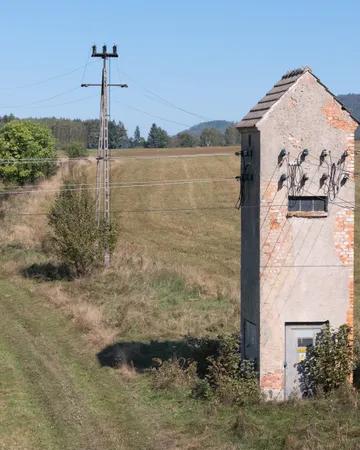
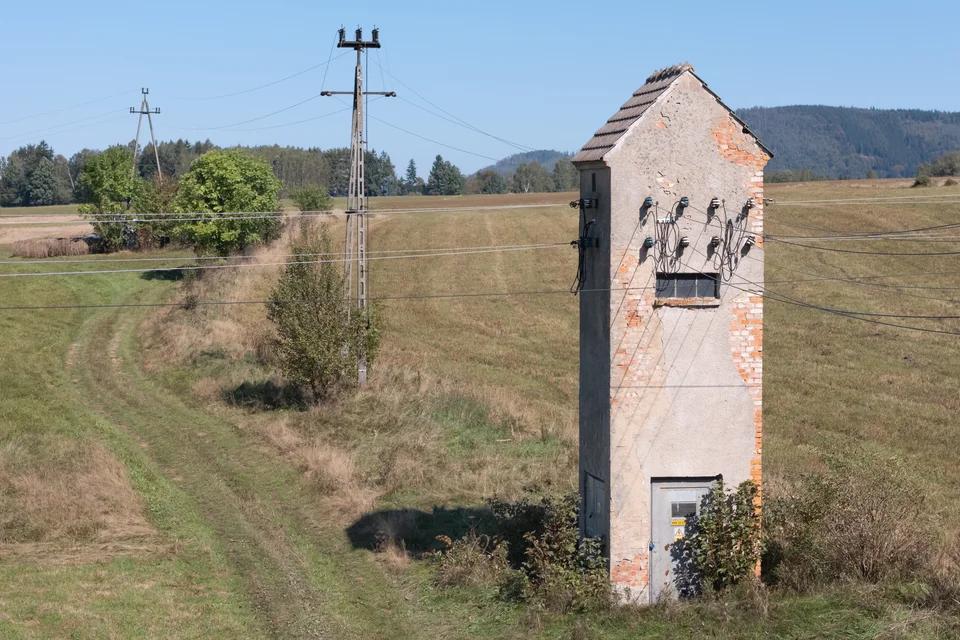

During due diligence, insist that the vendor supply their High-Voltage Large Industrial Power Settlement Bill (高压大工业用电电费结算单) for the preceding three months. A legitimate manufacturer will readily provide this (with financial unit prices redacted if sensitive); a paper brokerage will fabricate excuses about confidentiality.
Examine three critical engineering parameters on the utility bill:
- Consumer Account Name & Address (用电户名与用电地址): The account name must match the exact Chinese corporate name on your purchase agreement. If the power bill is in the name of 'Ningbo Xinxin Metal Stamping Factory' while your contract is with 'Ningbo Zenith Technology Co., Ltd.', Zenith does not own the facility.
- Transformer Capacity (变压器容量 in kVA): Industrial manufacturing plants operate dedicated step-down transformers (e.g., 630 kVA, 1,250 kVA, or 2,500 kVA). A facility operating on a standard commercial tariff (e.g., 50 kVA or 100 kVA shared commercial building power) cannot power industrial production machinery.
- Active Electrical Energy Consumption (有功总电量 in kWh): The total kilowatt-hours consumed across Peak (峰), Flat (平), and Valley (谷) time periods.
Apply the SourceRating Industrial Power Verification Formula to calculate whether the vendor's declared plant capacity aligns with physical reality:
Formula: $$E_{\text{est}} = \sum_{i} \left( N_i \times P_i \times \eta_i \times H_i \times D \right)$$
Where $N_i$ is the number of installed machine tools of category $i$; $P_i$ is the rated electrical motor/spindle power in kW; $\eta_i$ is the average operating load factor (typically 0.60 to 0.75 for CNC and hydraulic equipment); $H_i$ is active running hours per day; and $D$ is operational working days per month (typically 22 to 26 days).
| Manufacturing Equipment Category | Typical Connected Motor/Spindle Rating ($P_i$) | Assumed Operating Shifts & Duty Cycle | Minimum Expected Monthly Power (per Machine) | Red Flag Consumption Threshold (for 10 Units) |
|---|---|---|---|---|
| Vertical CNC Machining Centers (BT40/BT50) | 15 kW to 22 kW | 2 shifts (16 hrs/day), 24 days, 65% load factor | 3,744 kWh to 5,491 kWh per machine | < 15,000 kWh/month indicates machines are idle, non-operational, or decorative showroom props |
| Heavy Hydraulic Presses & Deep Drawing (300T - 800T) | 37 kW to 75 kW | 1.5 shifts (12 hrs/day), 22 days, 60% load factor | 5,860 kWh to 11,880 kWh per press | < 25,000 kWh/month for 5 presses indicates pressing is outsourced to third-party stamping sheds |
| Plastic Injection Molding Machines (250T - 450T) | 30 kW to 55 kW (motor + barrel heaters) | Continuous (24 hrs/day), 26 days, 70% load factor | 13,104 kWh to 24,024 kWh per machine | < 50,000 kWh/month for 5 machines indicates the vendor is not molding in-house |
| Medium-Frequency Induction Melting Furnaces (0.5T - 1.5T) | 250 kW to 800 kW | 1 shift (8 hrs/day), 20 days, 80% thermal efficiency | 32,000 kWh to 102,400 kWh per furnace | < 50,000 kWh/month indicates casting operations have ceased or are entirely subcontracted |
If a precision machining supplier claims to operate twenty CNC machines and three wire EDM cutters, but their monthly power settlement bill shows total consumption of only 2,800 kWh, the conclusion is mathematically absolute: the machines in that workshop are not cutting metal. The supplier is a showroom broker running a sales office with decorative machinery, while your precision components will be farmed out to uncontrolled shadow workshops.
The on-site anti-fraud audit protocol: six tripwire checks
When an on-site audit is conducted—whether by the buyer's internal procurement engineering team or an accredited third-party inspection agency (such as Bureau Veritas, TÜV SÜD, SGS, or an independent sourcing engineer)—auditors must break away from the vendor's rehearsed VIP tour path and execute six forensic tripwire verifications:
- Tripwire 1: Fixed Asset Tag & Machine Nameplate Audit: Walk up to three major CNC machines, laser cutters, or automated stamping lines. Inspect the metallic fixed asset tag (固定资产标签) riveted or affixed to the machine chassis. Verify that the asset code matches the company's internal fixed asset ledger (固定资产卡片) and depreciation schedule. Inspect the manufacturer nameplate: if the asset tag is missing, freshly peeled off, or displays the name of a completely different legal entity, the equipment is leased from or owned by a third-party tenant.
- Tripwire 2: The 'Follow the Workpiece' Traceability Walk: Select an active pallet of semi-finished parts sitting beside a machine. Pick up the physical Route Sheet / Job Traveler (工序流转卡 / 派工单). Check whether the company name printed on the traveler header matches the vendor. Read the operator's employee number and match it against the worker standing at the machine. Cross-check the raw material heat number written on the traveler against the inbound receiving mill test report (MTR). In a staged showroom factory, travelers are either absent, blank, or bear the letterhead of an external subcontractor.
- Tripwire 3: Security Gate Log & Weighbridge Recordation: Every legitimate heavy manufacturing plant generates continuous physical traffic. Visit the main vehicle security post and examine the gate pass ledger (出门证/进门单) and the electronic truck weighbridge logs (地磅称重记录). A real steel fabricator, foundry, or machinery plant receives dozens of tons of bar stock, steel plate, forgings, cutting fluids, and crates daily. If the security log shows only courier deliveries and passenger vehicles over the past fortnight, the site is not receiving raw production materials.
- Tripwire 4: Tooling Maintenance & Coolant Sump Forensics: Touch the coolant sumps of CNC machines. Functional machining centers maintain circulating water-soluble cutting fluid that smells mildly of biocide and shows active filtration circulation. In decorative showroom factories, coolant sumps are bone-dry, tool magazines are empty, or guide rails are covered in settled dust rather than lubricating oil.
- Tripwire 5: Environmental Control & Exhaust Scrubber Operation: Heavy industrial fabrication generates dust, welding fumes, VOC emissions from spray painting, or chemical fumes from acid pickling. Check the rooftop exhaust scrubbers, cyclone dust collectors, and VOC catalytic combustion units. Touch the exhaust ducting: is the motor running? Are the pressure differential gauges on filter banks displaying operating differentials? A silent, pristine environmental system indicates the plant does not perform in-house fabrication.
- Tripwire 6: Privity of Contract Testing (The Floor Foreman Interview): Politely engage the shift supervisor or quality inspector in Chinese away from the sales escort. Ask three innocent questions: 'Which company signs your labour contract (劳动合同)?', 'Which entity pays your monthly social insurance (社保)?', and 'Who is your direct factory general manager?' In multiple documented cases, floor supervisors have openly stated that they work for Company B and have never heard of the sales trading entity (Company A) named on the foreign buyer's contract.
Contractual safeguards: bilingual anti-fraud and anti-outsourcing model clauses
Legal protection begins before the first dollar is remitted. Never execute a standard Chinese vendor's one-page proforma invoice (P/I). The international purchase agreement must incorporate ironclad, clause-by-clause representations of manufacturing reality, strict prohibitions against unauthorized subcontracting, and punitive liquidated damages enforceable under PRC law.
Clause 1: Representations and Warranties on Manufacturing Entity and Physical Premises (生产主体与实际制造场地真实性陈述与保证条款)
"Seller expressly represents and warrants that: (a) Seller is the sole proprietary owner and operator of the manufacturing facility located at [Exact Registered Factory Address, District, City, Province] ('Facility'); (b) all Goods supplied under this Contract shall be exclusively manufactured, assembled, and tested within the Facility by full-time personnel employed on Seller's direct statutory payroll with active social security registration; (c) Seller holds all requisite governmental licenses, permits, and Environmental Impact Assessment (EIA) pollutant discharge registrations necessary to operate the Facility; and (d) Seller has not entered into any tenancy, sham agency, or third-party arrangement misrepresenting physical asset ownership to Buyer.
卖方明确陈述并保证:(a) 卖方是位于【省、市、区、工厂详细注册地址】(以下简称“制造场地”)的唯一合法所有者和实际运营方;(b) 本合同项下供应的所有货物均应完全在上述制造场地内,由与卖方建立直接劳动关系并缴纳法定社会保险的专职全职人员完成制造、装配和检测;(c) 卖方持有运营上述制造场地所需的全部政府许可、资质及排污许可/环评批复;(d) 卖方未签署任何旨在向买方虚假陈述或夸大资产所有权的租赁协议、虚假代理或第三方合作安排。"
Clause 2: Strict Prohibition of Unauthorized Subcontracting (严格禁止未经书面批准的转包与第三方代工条款)
"Seller shall not assign, transfer, delegate, or subcontract the manufacturing, fabrication, processing, assembly, or testing of the Goods, in whole or in part, to any third-party factory, subsidiary, external workshop, or subcontractor without the prior express written consent of Buyer. Any unauthorized subcontracting or outsourcing, whether partial or complete, shall constitute a material and irremediable breach of this Contract, entitling Buyer to terminate this Contract immediately pursuant to Clause 4.
未经买方事先明确书面同意,卖方不得将货物的任何制造、加工、机械加工、组装或检验工序(无论是全部还是部分)转让、委托、分包或外包给任何第三方工厂、子公司、外部作坊或分包商。任何未经书面许可的转包或外发加工行为,无论部分或全部,均构成根本性且不可补救的重大违约,买方有权依照第4条之规定立即单方解除本合同。"
Clause 3: Unannounced Audit and Verification Access (无阻碍突击验厂与生产全流程核查权条款)
"Buyer and its designated technical representatives or third-party inspection (TPI) agencies shall have the unconditional right, without prior notice during regular operating hours, to enter the Facility to inspect raw materials, witness production processes, audit fixed asset inventory tags, verify job travelers and operator payroll credentials, and review monthly industrial electricity settlement records. Seller shall ensure unrestricted access to all production bays, warehouses, and inspection laboratories. Any refusal or delay of access exceeding two (2) hours shall be deemed an admission of unauthorized subcontracting.
买方及其指定的技术代表或第三方检验机构(TPI)有权在正常工作时间内,无须事先通知,直接进入上述制造场地,对原材料、生产过程、固定资产设备铭牌、工序流转卡、操作人员社保花名册及当月工业用电电费单进行无阻碍核查与现场见证。卖方应确保买方代表能够不受限制地进入所有车间、仓库及检测实验室。任何无正当理由拒绝或延误进入超过两(2)小时的行为,均视为卖方承认存在未经授权的违规转包行为。"
Clause 4: Agreed Liquidated Damages and Immediate Termination for Showroom Fraud (虚假展厅与空壳挂牌欺诈违约金及单方立即解除权条款)
"If Buyer discovers that Seller has committed showroom fraud, misrepresented factory ownership, or engaged in unauthorized subcontracting, Buyer shall have the legal right, pursuant to Articles 500, 563, and 585 of the Civil Code of the People's Republic of China, to: (a) unilaterally terminate this Contract with immediate effect upon written notice; (b) demand the immediate full refund of all advance deposits and progress payments within five (5) business days; and (c) recover agreed liquidated damages equal to thirty percent (30%) of the total Contract value, in addition to all inspection fees, legal costs, and consequential project losses incurred by Buyer.
若买方发现卖方存在虚构制造场地、隐瞒真实生产主体、挂牌欺诈或违规转包行为,买方有权依据《中华人民共和国民法典》第五百条、第五百六十三条及第五百八十五条之规定:(a) 发出书面通知立即单方解除本合同;(b) 要求卖方在五(5)个工作日内全额无条件退还买方已支付的全部预付款及进度款;(c) 要求卖方向买方支付相当于合同总金额百分之三十(30%)的约定违约金,并全额赔偿买方因此产生的全部检测费、律师费、仲裁费及工程工期损失。"
The overseas buyer's master supplier due diligence checklist
Integrate this step-by-step audit gate into your company's vendor onboarding standard operating procedure (SOP). Score each prospective supplier before issuing technical RFQ documents:
- GSXT Corporate Identity Match: 18-digit USCC verified on gsxt.gov.cn; corporate name matches invoice, contract, and beneficiary bank account exactly; registered address is in an approved industrial zoning district.
- Paid-in Capital Substance: Shareholder contribution verified; paid-in cash capital is proportionate to contractual exposure (> RMB 2,000,000 for complex equipment or equal to at least 50% of PO value).
- Social Security Headcount Alignment: Enterprise Annual Report discloses insured employee headcount consistent with claimed factory operations (minimum 30 full-time insured employees for medium machinery plants).
- Environmental Legitimacy: Active Pollutant Discharge Permit or Registration verified on permit.mee.gov.cn matching vendor name and plant address; confirmed not subject to environmental shutdown orders.
- Judicial & Litigation Hygiene: Zero records on Supreme Court Dishonest Judgment Debtor (失信被执行人) or High-Consumption Restriction lists (zxgk.court.gov.cn); no active asset freeze orders on corporate accounts.
- Industrial Electricity Consumption Audit: Three consecutive months of official State Grid power bills reviewed; transformer kVA capacity confirmed; monthly active kWh consumption mathematically validates claimed machinery operating hours.
- Direct Customs Export Registration: 10-digit Customs Registration (CR) Code verified on singlewindow.cn; vendor exports under its own corporate identity without third-party transit brokers.
- Unannounced On-Site Asset Verification: Physical asset tags on machinery cross-checked with fixed asset register; coolant sumps and chip trays inspected; security gate pass and weighbridge logs verified; floor workers confirmed on direct payroll.
- Bilingual Anti-Outsourcing Contract Executed: Purchase agreement incorporates strict representations on manufacturing premises, explicit subcontracting bans, unannounced audit rights, and 30% agreed liquidated damages under PRC Civil Code Article 585.
Evidence checklist
Master Due Diligence Verification Gates
1. Corporate Registration & Capital Substance
- — 18-digit Unified Social Credit Code (USCC) cross-referenced on official GSXT portal (gsxt.gov.cn).
- — Business Scope explicitly contains 'Manufacture' (制造) or 'Processing' (加工), not merely 'Sales' or 'Trade'.
- — Paid-in capital (实缴出资额) verified via official corporate annual reports and bank contribution receipts.
- — Controlling shareholders and Ultimate Beneficial Owners (UBO) screened against judicial blacklists.
2. Operational Capacity & Utility Reality
- — Annual report social security contributor headcount matches physical shop-floor headcount.
- — National Pollutant Discharge Permit (排污许可证) active on permit.mee.gov.cn matching factory address.
- — Three consecutive months of High-Voltage Industrial Power Settlement Bills reviewed from State Grid / Southern Power Grid.
- — Monthly kWh consumption mathematically validates equipment operating hours and order volume.
3. On-Site Physical Integrity & Traceability
- — Fixed asset tags and serial plates on machine tools match vendor's balance sheet asset register.
- — Active route sheets and job travelers (工序流转卡) bear vendor's corporate name and operator IDs.
- — Security gate logs and weighbridge records confirm daily raw material and component freight intake.
- — Floor supervisors and quality inspectors confirm direct employment and payroll privity.
4. Contractual & Financial Governance
- — Purchase agreement signed directly with the manufacturing entity possessing physical assets.
- — Strict prohibition of unauthorized subcontracting with immediate termination rights incorporated.
- — 30% agreed liquidated damages for showroom or shell fraud specified under PRC Civil Code Article 585.
- — Corporate official seal (公章) verified with security anti-counterfeiting code matching police registration.
Decision rule
Proceed, hold, or reject
Paid-in capital is RMB 0 or nominal (< RMB 100,000), while registered capital is claimed as RMB 20,000,000; corporate established under a nominee straw man.
Refuse to execute contract or wire funds. The vendor is an undercapitalized shell with zero corporate equity. In the event of breach or cargo defect, contractual damages are legally uncollectible.
Vendor claims a 200-worker precision machine shop, but official GSXT annual report discloses only 3 or 4 insured employees paying statutory social security.
Reject the supplier as a pure paper trading brokerage. True production is 100% outsourced to uncontrolled shadow workshops operating outside traceable quality management systems.
Vendor operates a real warehouse and discloses that casting and machining are contracted to verified sister foundries under shared ultimate beneficial ownership (UBO).
Hold contract execution until both entities are legally bound. Require the parent manufacturing facility to sign as a joint and several guarantor (连带责任保证人), and conduct on-site audit at the actual foundry.
Monthly industrial power settlement bill shows < 3,000 kWh consumption despite claims of twenty active CNC machining centers and hydraulic presses.
Reject immediately. The physical energy consumption mathematically disproves in-house manufacturing. The showroom machines are decorative props staged for client deception.
Vendor provides active Pollutant Discharge Permit, 630 kVA transformer power bill with 65,000 kWh/month consumption, 85 verified social security contributors, and riveted asset tags matching ERP ledgers.
Approve supplier for RFQ and production contracting. Execute bilingual contract incorporating strict anti-subcontracting clauses, unannounced audit rights, and staged milestone payment terms.
Buyer questions
Frequently asked questions
Can an overseas buyer still work with a Chinese trading company if they provide good service?
Yes, provided the relationship is completely transparent. Legitimate trading companies provide genuine value when they consolidate multiple sub-tier components, manage domestic logistics, perform certified kitting, and transparently disclose their source manufacturing plants. The fatal risk arises when a trader pretends to be a manufacturer ('showroom fraud'), conceals where production actually occurs, takes a 30% deposit, and secretly dumps your order on low-bid, unvetted suburban shadow workshops.
What if a prospective supplier refuses to provide their industrial electricity bill citing business confidentiality?
A refusal to provide utility records is an overwhelming red flag. Legitimate manufacturers understand that energy consumption is standard technical audit data and will gladly provide redacted bills (obscuring monetary tariffs while keeping kWh consumption and transformer kVA visible). In contrast, paper brokerages operating out of commercial office buildings or showroom suites refuse because their electricity bill reflects only fluorescent lighting and air conditioning.
How does the 2024 PRC Company Law protect foreign buyers against undercapitalized shell companies?
Article 47 of the revised PRC Company Law mandates that all registered capital must be fully paid in within 5 years of establishment. Under the pre-2024 regime, bad-faith actors registered companies with RMB 50 million in capital payable in 2050, leaving zero paid-in funds. Today, buyers can check the GSXT to verify whether shareholders have actually injected real cash equity into corporate accounts. Furthermore, under Article 54, if an entity cannot pay its debts as they fall due, creditors can petition the court to accelerate shareholder capital contribution obligations, holding shareholders personally liable up to their unpaid capital amounts.
Why isn't an ISO 9001 certificate sufficient proof that the supplier is a genuine factory?
An ISO 9001 certificate only certifies that an accredited registrar audited a quality management documentation system at a specified physical address on a given day. In China, thousands of commercial brokerages obtain ISO 9001 certificates whose certified scope explicitly reads: 'Sales and trade of mechanical hardware' (五金机械的销售与贸易). The certificate does NOT certify manufacturing capabilities. Furthermore, showroom operators frequently display copies of certificates belonging to their sub-suppliers or landlord factories without having any corporate affiliation.
Reading notes
Official Regulatory Portals and Compliance Sources
The statutory registries, legal frameworks, and compliance standards governing Chinese corporate due diligence, factory environmental verification, and contractual enforcement cited in this guide include:
State Administration for Market Regulation (SAMR)
The statutory central repository for Unified Social Credit Codes (USCC), corporate business scopes, registered vs paid-in capital, annual reports, social security headcounts, and administrative penalties.
National People's Congress / The State Council of the PRC
Official promulgation of the revised Company Law, establishing the mandatory 5-year paid-in capital requirement under Article 47 and capital acceleration remedies under Article 54.
Ministry of Ecology and Environment of the PRC (MEE)
Statutory national verification platform for industrial pollutant discharge permits and environmental compliance registrations across manufacturing facilities.
Supreme People's Court of the People's Republic of China
Official national registry for Dishonest Judgment Debtors (失信被执行人名单) and High-Consumption Restrictions (限制高消费) issued against default corporate controllers.
General Administration of Customs of the PRC (GACC)
National foreign trade registry for 10-digit Customs Registration (CR) Codes, direct exporter qualifications, and AEO credit ratings.
Continue the decision
Related buyer guides
The Cross-Border Procurement Field Guide: Managing Supply Chain Risk from Factory Audit to Port Release
Comprehensive full-spectrum operational playbook covering vendor due diligence, should-cost models, ITP witness points, and dispute resolution.
The PO Names a Factory. The Invoice Names a Trader. Who Is the Seller?
How cross-border buyers verify seller entity chains, VAT invoice matching, and export rebate privity across Chinese manufacturing suppliers.
The Certificate Is Genuine. Is It the Factory You Are Buying From?
Why genuine ISO 9001 certificates often fail to protect industrial buyers when the audited scope covers only trading or a third-party premises.
The Supplier Sent a Bank Guarantee for Your Deposit. Will the Bank Actually Pay?
Advance payment guarantee (APG) and performance bond risk management under URDG 758 rules for custom equipment deposits.